


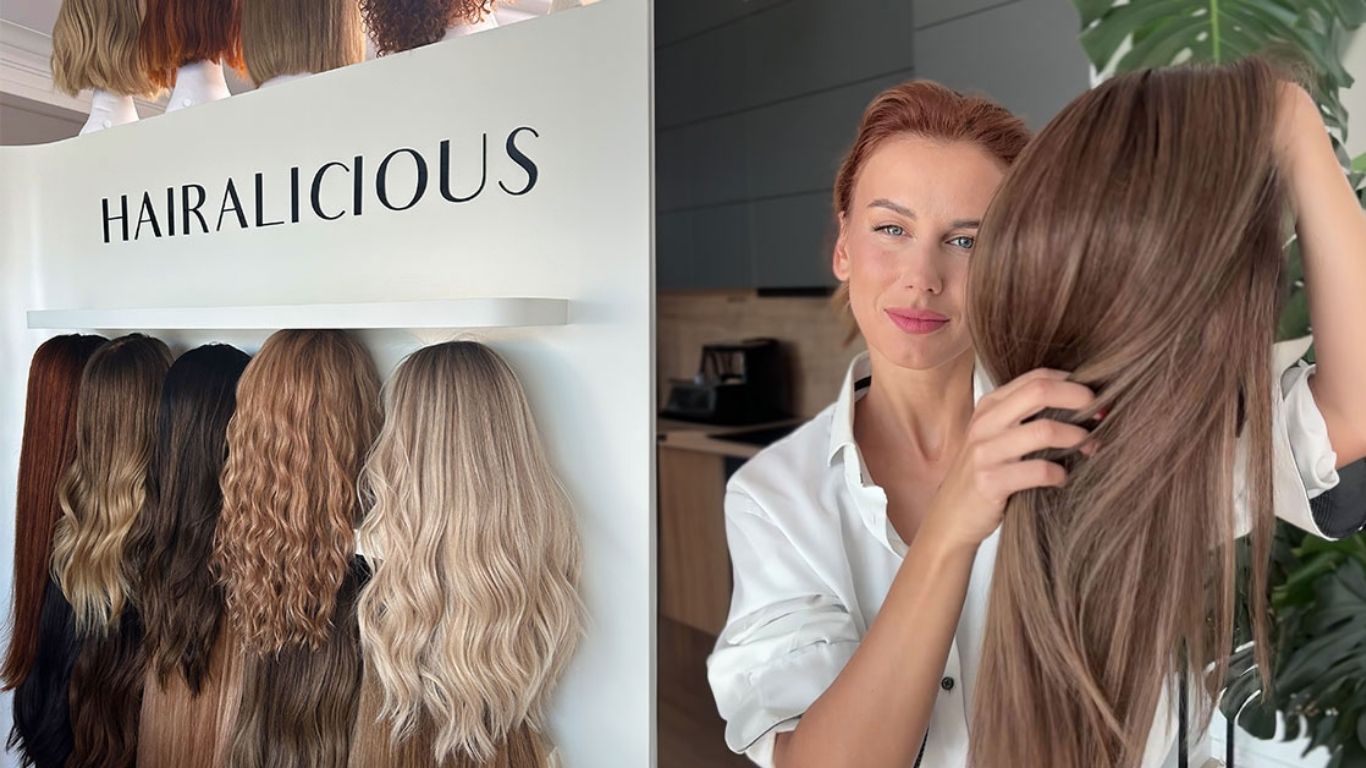
Some discover and choose natural hair wigs right away, while others eventually come to them after trying some other options. Either way, this is an important step, as natural hair wigs provide more comfort, a truly realistic look, and often delight with all their advantages for longer. If you’ve already chosen this path, congratulations – it’s definitely a wise investment.
However, even if you have (or are planning to buy) a human hair wig, some questions are bound to come up: how to put it on correctly, how to care for it, and how to store it so that it lasts as long as possible. That’s why we’ve put together this FAQ guide, which answers the most common questions for beginners and will help you feel confident every step of the way. To make things even clearer, we’ve grouped the answers by category, so you can quickly find what you’re looking for.
We believe wigs should be as effortless as possible, which is why all Hairalicious® wigs are glueless (however, if you prefer extra hold, adhesives can be used in the lace area). Still, some beginners also ask about glued wigs, or come to us with previous experience using them. To make this guide as useful as possible, we’ll cover both glued and glueless wigs for beginners – but with a special focus on natural hair wigs.
Table of Contents
Preparation and application
How to put on a wig?
The way you put on a wig depends on its type – whether you choose glued or glueless wigs. When it comes to glued wigs, the term “install” is most commonly used, while in the case of glueless wigs, it is simpler to say “apply”.
Applying glued wigs
Glued wigs are usually attached with adhesives or wig tape.
- When applying a glued wig, bio hair should be as flat as possible against the head.
- Then, clean the forehead area with alcohol wipes, and apply adhesives along the hairline around the perimeter of the head.
- Finally, press the lace against the skin. This method helps to “melt” the lace, making it less visible.
However, the glue can damage your bio hair and shorten the lifespan of the wig as the lace is constantly exposed to adhesive products. Moreover, adhesive-removing solvents are alcohol-based and must be rubbed into the lace where the hair knots are tied. Alcohol strips moisture from the hair fibers it touches, leaving them weaker and more prone to breakage. Over time, this can cause the hairline of glued wigs to thin out, reducing the overall lifespan of the wig.
Applying glueless wigs
Hairalicious® natural hair wigs are completely glueless, so they require no adhesives.
1. If you have bio hair, make sure it lies as flat as possible when applying a wig. A low ponytail, braids, or twists are the best choices, but keep them loose to avoid any bumps. You can smooth shorter hair with hairspray.

2. To apply, align the front part of the wig to your hairline and place the elastic band at the nape of your neck.
3. Tuck the remaining hair under the elastic band and cap.
4. Secure the wig with combs at the nape of the neck and adjust the position – check the ear area to make sure everything is symmetrical. If some of your hair is visible at the front, tuck it in gently with your fingers or a comb.
How to put on a wig cap?
With some of the glued wigs, a wig cap usually hides your bio hair and creates a smooth, even base for the wig. A wig cap also protects your hair from the effects of adhesives. In many cases, people also glue down the cap itself. They trim the thick edge, secure it close to the hairline, and sometimes blend it with makeup so its color matches the skin. This helps ensure that when you apply a wig with transparent lace, the lace reveals the scalp shade rather than the hair underneath.
With the glueless human hair wigs by Hairalicious®, a separate wig cap is not needed. Our wigs already have an integrated cap inside, so you don’t need any additional steps before applying the wig itself. For the best result, we recommend aligning your natural parting with the wig’s parting.
Compared to glued wigs, where both the wig cap and the wig itself need to be glued down in a time-consuming process that requires precision and experience, glueless wigs can be applied or removed in just a couple of minutes.
How to wear a wig with long hair?
If you have bio hair, the trick is to hide it in such a way that the surface of your head is as smooth as possible. The easiest way to do this is to tie the hair into a low ponytail, twist it, or braid it.
However, if your hair is very thick or extremely long, these solutions may leave visible bumps. In this case, it is best to divide your hair and braid it into several small braids, keeping the ends loose. This way, you can evenly spread the braids at the bottom, avoiding bumps and uneven spots.
Do you need a wig cap if you have short hair?
Once again, it depends on the chosen wig. If you have very short hair, a wig cap is not necessary for glued wigs, but it can be useful as it protects your natural hair from the adhesive and provides an even smoother base. In addition, if your bio hair is very dark, a wig cap can also make the parting look more natural. Otherwise, the dark hair might show through the lace of the wig.
With glueless Hairalicious® natural hair wigs, an additional wig cap is not necessary, neither for short nor long hair, as it is already integrated into the wig itself.

However, if your bio hair is very short and thick, a wig cap can sometimes be useful to keep small hairs from slipping out during the day. To make things even easier, our wigs come with a velvet grip band (also known as a velvet gripper or topper grip). This band helps secure short hairs so they don’t stick out, and provides an anchor for the comb at the nape, making the wig feel even more secure.
Adhesives and security
How to use wig tape?
Wig tape is a double-sided adhesive strip that can be used with glued wigs for extra hold. If you decide to use tape, here’s how to do it:
- Prepare your hair and skin. You should flatten your bio hair away from the face so the tape doesn’t catch on it. If you’re using a wig cap, secure it in place first. Then, clean your forehead with alcohol wipes to remove oils and makeup.
- Attach the tape to the wig. Cut the tape into smaller pieces if needed, peel one side of the tape and stick it to the inside edge of the wig’s lace.
- Put on the wig. Position the wig on your head as you normally would. Make sure it sits in the right place.
- Secure the lace. Carefully peel of the protective film from the tape and press the lace down onto your skin. Start from the center of the hairline and work your way outwards. Use a fine-tooth comb to gently press the lace against the skin for a seamless finish.
- Removing the tape. Never pull the wig off by force. Instead, use a solvent made for wig adhesives. Dab it onto the lace where the tape is, wait for it to release, and only then remove the wig. After that, peel off any leftover tape from the lace and clean it thoroughly before the next wear.
Glueless human hair wigs, such as Hairalicious®, do not require tape, but since they have lace running from ear to ear, you always have the option to use tape if you want extra hold.
How to secure a wig?
There are several ways to attach a wig, and they also depend on the type of wig. When it comes to glued wigs, security is usually provided by special adhesives or wig tapes, which we have talked about above.
Glueless natural hair wigs usually have elastic bands, clips, and combs that help the wig stay securely on the head without glue. Therefore, to ensure maximum stability of the wig, it is enough to apply it carefully and secure it with these elements. For clients with very fragile bio hair, or for those who don’t have hair at all, we also include wig grips free of charge. These tailor-made velvet grips improve security without taking up much space under the wig. They work by creating gentle friction that prevents the wig from shifting, so the wig stays in place even without using clips or combs.
How to keep a wig from slipping?
If the wig slips, it’s usually a sign that the size is wrong or the installation/application wasn’t correct. First, make sure that the wig measurements match the size of your head. If it fits right but tends to slip back due to your head shape, you can use a wig grip. It creates friction and stops the wig from moving. Another trick is to tuck the back comb under the elastic band to lock the wig to itself for extra security.
For glued wigs, check if you secured the lace in all the right places and you’re using enough adhesive.
For glueless wigs, also make sure that you adjusted and secured all the built-in features (elastic bands, clips, combs) correctly.
How to cut a lace front wig?
Lace front wigs, just like other natural hair wigs, usually come with excess lace that needs to be trimmed before wearing the wig for the first time. If you wish, we can trim the lace for you when you purchase a wig from Hairalicious®. But if you’d rather do it yourself, we recommend following these steps:
- Place the wig on a stable surface, comb the hair back, and spray it with water or clip it away so it doesn’t get in the way.
- Then carefully trim the lace along the hairline with scissors, leaving about 0.2” (0.5 cm) before the first hair starts.
This way, the lace sits close to the hairline but still leaves a little room for adjustments if the edges fray over time. It’s better to cut less at first and adjust later if needed.
Also, keep the cut straight rather than zigzag if you don’t plan to use adhesives or holding spray. Uneven edges won’t sit flat on the skin without extra products to secure them.
3. Around the nape and ear tabs, trim as close to the hairline as possible for the most natural result.
How to remove wig glue?
When removing a glued wig, it is essential not to rush and not to pull on the lace with force.
- You should soften the glue using special solvents. Gently dab the solvent on the lace where the glue is and wait until it releases the adhesives. The solvent breaks down the glue, allowing the lace to easily separate from the skin.
- After removing the wig, we recommend to wash the skin to remove any glue residue. It’s equally as important to thoroughly clean the lace itself and make sure no adhesive remains.
However, glueless wigs do not require this process – you simply remove them just like you would take off a hat or another hair accessory.
How long can you keep a wig glued on?
Although sometimes a glued wig can last for several days or even longer, we do not recommend to wear it for too long. For hygiene reasons and to preserve the condition and longevity of the wig, it is best to remove it every day before sleeping.
Glueless wigs for beginners – and for anyone who values comfort – serve this purpose, as you can easily put them on and remove them any time you want.
How do you protect your hairline from a wig?
The hairline, especially when dealing with thinning hair or hair loss, can be extremely sensitive; therefore, it is important to protect it. If you are using a glued wig, wear a wig cap as it creates a barrier between the glue and your natural hair. Remove the wig carefully; never pull it off with force. Choose adhesives or strips that are gentler on the skin. Some people opt for gentler products, like non-water resistant hairsprays. However, it’s worth noting that any type of adhesive can still put stress on a fragile hairline.
With glueless wigs, such problems usually do not arise, because the wig stays in place without any adhesives, so the hairline remains completely safe.
The easiest way to wear a wig
Glueless natural hair wigs take away most of the worries that usually come with putting on, removing, or keeping a wig in place all day. They don’t require glue or extra tools – the wig sits securely, feels comfortable, looks natural, and can be taken off in seconds. In other words, they are true, ready-to-go wigs: a solution for both everyday comfort and the freedom to explore different looks.
Coloring and styling
How to dye a wig?
You can dye Natural hair wigs just like bio hair, but you should always do it with extreme caution. Dyeing is a chemical treatment, and if performed incorrectly, it can shorten the lifespan of the wig. The safest choice is to trust the process to a professional. If you decide to dye your wig at home, remember: always perform a strand test first, just as professionals do.
When coloring, avoid the knots and lace area. If dye touches them, it can leave visible stains or darken the knots, making them more noticeable.
You can find more detailed instructions for Hairalicious wigs here. We have also compiled a list of recommended stylists experienced in dyeing wigs.
Can you lighten or darken a wig?
You can’t dye all natural hair wigs in the same way. The final result often depends on how someone originally processed the hair – whether they bleached it, dyed it with textile dye, or colored it with professional salon dye.
Any human hair wig can be dyed darker. Just be careful not to touch the knots, as this can make them darker and more visible. As for lightening, you can lighten wigs that are hand-painted, salon-colored, or have never been dyed before. We don’t recommend bleaching wigs if someone already dyed them with textile dyes, because the results often turn out unpredictable.
Since every wig is unique in its base color and pigments, professional coloring is always the safest option.
How can you style natural hair wigs?
You can style natural hair wigs just like your own hair – i.e., you can use curling wands, straighteners, or hair dryers (just remember to use heat protection products), as well as try out various heatless styling methods. When it comes to parting, not all wig types on the market allow you to restyle it, but all Hairalicious® wigs give you this flexibility.
Styling also depends on the ear tabs construction.
- Lace ear tabs let you create sleek, high ponytails as well as low or messy styles.
- Firm ear tabs are more suitable for low or messy ponytails. You can also braid the hair or accessorize it with clips, headbands, or scrunchies.
Maintenance
How to wash a wig?
- Before washing, comb your dry wig.
- Wash with cold or lukewarm water, avoiding hot water.
- Use SLS-free shampoo, gently rubbing it through the length of the wig with your palms.
- Turn the wig inside out to shampoo the inside of the cap as well. When you’re done, rinse the hair with cold water.
- Apply conditioner only from the middle to the ends, avoiding the roots.
- Rinse the wig thoroughly to make sure you leave no residue product on the cap.
- Dry off any excess with a towel without rubbing.
- Apply leave-in products to moisturize the hair, starting from the mid-length and working down to the ends.
- While the hair is still wet, use a wide-tooth comb to detangle it from the bottom up.
- Finally, set the parting where you want it and leave the wig to dry on a stand.
How often should human-hair wigs be cleaned?
How often you should wash a natural hair wig, depends on many factors. As a general guideline, we recommend washing every 6-8 wears, but this can vary. If the wig is worn daily, exposed to sweat, product build-up, smoke, or humid climate, it may need to be washed more often. Just like with our own bio hair, the wig should be washed whenever it starts to feel dirty, smell, or lose freshness. Note that washing too often can dry out the hair, while washing too infrequently causes grease and dust to accumulate.
How to brush a wig?
Only comb dry wigs with a wide-toothed comb or a brush with rounded bristles. Rounded bristles are especially important at the roots. Unlike fine-tooth combs with sharp teeth, they won’t catch on the knots, preventing them from loosening and keeping the hair more secure. Always start at the ends and work your way up to minimize breakage.
How to keep a long wig from tangling?
Just like long natural hair, long wigs tend to tangle a little more easily than short wigs. To prevent long wigs from tangling more than usual, you should gently brush the hair from bottom to top on a regular basis and use moisturizing products that do not contain SLS or alcohol, which dry out the hair.
How to store wigs?
When not wearing, store your wig in a hair net, on a stand, or on a mannequin head. When traveling, it is best to transport it in a box.
How to stop a wig from shedding?
All wigs shed to some extent. It’s completely normal and unavoidable, even with the highest-quality wigs. The key to reducing the risk of excessive shedding is proper care:
- Always comb gently from ends upwards.
- Wash the wig regularly to avoid product build-up.
- Keep the hair hydrated with moisturizing products.
- Avoid harsh ingredients (such as alcohol or SLS) that can dry out the hair and cause breakage.
- Avoid strong friction and if sleeping in a wig, use a silk pillowcase.
If you notice more shedding than usual, review your wig care routine. Check your washing frequency, the products you use, and whether you moisturize the hair enough. Adhesives such as glue or wig tape, as well as alcohol-based solvents, can also increase shedding, especially with blonde wigs or those with bleached knots.
How long does a wig last?
The longevity depends on several factors: how often it is worn, how well it is maintained and what chemical treatment the hair has undergone during production. Virgin colors (which is natural black) generally hold up the longest, if we compare it to very light shades. High-quality wigs can usually last from 4 months to a year or more, but frequent wear, dyeing, improper washing, and styling with heat without using heat protection can shorten their lifespan.
Wig types and realism
What are the most realistic wigs?
Natural hair wigs are considered the most realistic wigs because they are made from real human hair. They move, fall, and feel just like your own hair. But the realism also depends on many other factors:
- Transparent, thin lace that seamlessly blends with the skin.
- Single-hair, single-knot tying technique that creates a finer, more realistic look.
- Lace area size (larger lace areas allow for deeper, more versatile partings).
- Coloring technique that follows real hair trends and complex hand-painted methods that allows to create natural-looking colors.
- Other small details such as baby hairs, thinned hairlines, bleached/toned knots.
Are lace front wigs the most natural-looking option?
Lace front wigs certainly provide a natural look thanks to the thin lace section at the front, which realistically imitates the scalp. In fact, all Hairalicious® wigs come with lace front construction. The difference lies in the collections and their unique strengths:
Silk Top Wigs offer premium quality European double-drawn hair and the most realistic-looking parting, imitating hair growing out of your scalp.
Extra Thin Hairline Glueless Wigs feature the most natural-looking extra-thin hairline, lightweight density around the face, and thinner hair ends which creates imperfectly natural look.
We make Lace Front Wigs with premium quality European double-drawn hair and naturally flat partings.
How do luxury wigs differ from other wigs?
Luxury wigs are distinguished not only by their manufacturing process, but also by the materials and details that go into them. They are usually completelly or partially hand-tied, so they take a lot of time and skill to produce. The hair itself is carefully selected (we use European or Brazilian human hair) to ensure the most natural movement and feel. Transparent, high-quality lace, hand-painted coloring techniques, and fine details such as baby hairs, thinned hairlines, and bleached knots all add to the realism.
What makes natural hair wigs look more realistic than synthetic wigs?
The main difference is the hair itself. Synthetic hair only imitates the appearance of human hair, but it is not always 100% realistic. Natural hair wigs, on the other hand, are made from real hair, which means that they don’t just look more natural, but also feel softer, can be heat-styled or even recolored. Unlike synthethic wigs, which are machine-made and may look overly shiny, human hair wigs are crafted by hand. This detailed process is what gives natural hair wigs their realism and quality.
Which wigs are the best for daily wear?
We recommend going glueless as one of the best options for everyday wigs: such wigs stay securely in place without adhesives, are easier to maintain, do not irritate the skin, and save time because you don’t need to use any glue daily. You can remove them easily each day to allow your skin to rest and breathe.
Still have questions?
Didn’t find the answer you were looking for? There’s plenty more to explore in our Hairalicious Wig Academy! Here you’ll find professional advice and practical video tutorials on preparing, wearing, caring for, and styling glueless natural hair wigs – perfect if you want not just to wear a wig, but truly master the skill.


 No products in the cart.