


 No products in the cart.
How to
choose a wig
Your Hairalicious® Decision Guide
Wondering how to choose a wig? Start by thinking about your individual situation. Do you need partial coverage for thinning around the parting, crown, or hairline, or a full wig for more extensive or complete hair loss? Do you simply want to change your look? Is it your first wig?
If a wig is the right option, the best choice depends on several factors: the condition of your natural hair, your head measurements, scalp sensitivity, daily comfort, and cap construction. This wig decision guide will help you understand the main types of wigs, compare Hairalicious® collections, and determine which details matter most.
Quick Summary
1
Start with your situation: the hair topper vs wig choice depends on the area you need to cover and the change you want. A hairline topper may be suitable for partial thinning, while wigs provide fuller coverage and more freedom to change length, color, or volume.
3
2
All Hairalicious® wigs are glueless and can be worn without adhesives, which is especially important when choosing wigs for sensitive scalp.
5
3
Size matters as much as style: the right fit can vary depending on whether or not you wear your natural hair underneath the wig, and on the type of wig you choose.
2
4
The most natural looking wigs depend on several details working together: hairline, parting, knots, lace, color, and density distribution.
4
5
Cap construction affects comfort, security, parting realism, hairline realism, and styling flexibility, so understanding the main types of wig caps helps narrow down the choice.
6
The right choice becomes clearer when you decide what matters most: hairline realism, natural parting, soft cap feel, easy application, or styling flexibility.
Types of wigs by Hairalicious®
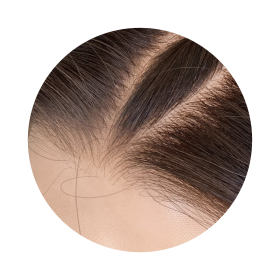
Realistic hairline, transparent HD lace, and Brazilian single-drawn hair for a naturally imperfect look.
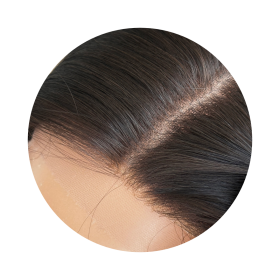
Flat parting, firm ear tabs, European double-drawn hair, and more space inside the cap for bio hair.
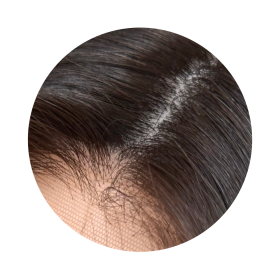
Silk / skin top construction, hidden knots, realistic scalp-like parting, and soft inner cap material.
Natural wig features
Hairline
A natural hairline helps the wig blend seamlessly with the skin around the face.
Parting
A realistic parting gives the impression that the hair is growing directly from the scalp.
Knots
Small, well-bleached knots reduce the number of visible dots in the lace area.
Density
Distribution
Balanced density distribution helps even fuller wigs look natural.
Lace
Thin, transparent lace and a smooth transition into the skin help the wig blend more naturally.
Choose a wig by
your situation

- Partial thinning around the parting, crown, or hairline. What is a hair topper? It is a partial hairpiece designed to blend with your existing hair and add coverage where it is thinning, without covering the whole head. A hairline topper may be suitable when you want to keep a similar length, color, and overall volume. If you only need partial coverage, a hairline topper may be a more targeted option.
- More extensive hair loss, thinning hair, or fragile natural hair. Wigs for women with thinning hair may be better when a larger area needs coverage or a topper would not provide enough coverage. If you’re looking for wigs for hair loss, the most important thing is to choose a wig that is gentle on your bio hair. Hairalicious® wigs can be worn without clips or combs, using an elastic band, adjustable straps, or a lace grip.
- Alopecia totalis, alopecia universalis, or complete hair loss. When choosing wigs for alopecia or complete hair loss, stable hold without adhesives is key. Hairalicious® wigs feature glue-free wear elements: silicone inserts, an elastic band, and a grip.
- Medical hair loss or chemotherapy recovery. During medical hair loss or chemotherapy recovery, the scalp may be more sensitive, making it important to choose a wig designed for sensitive scalps: soft inner cap material, gentle inserts inside the cap, or a lace grip cap.
- Style change or beauty transformation. If you want to change your overall hair length or color, try a different cut, or dramatically increase volume, you need a full wig rather than a topper. A wig allows you to transform your look while protecting your natural hair from frequent dyeing, bleaching, and heat styling damage.
- First-time wig wearers. When choosing wigs for first-time wearers, it's best to start with a simple, straightforward design. Firm ear tabs, a glueless fit, and a clear cap construction help the wig stay securely in place and feel comfortable for everyday wear.
Learn more about choosing a wig
Related articles
Choose a wig by
key features
- Cap construction. If you're wondering how to choose a wig, start with the cap construction. Different types of wig caps determine how easy the wig is to apply, how well it will stay in place, how natural the hairline and parting will look, and whether it will be comfortable for daily wear.
- Size and fit. The right size is important for both comfort and a natural look. Consider the circumference, front-to-nape measurement, and how much space you'll need for your natural hair under the wig, especially if you're choosing a wig for the first time.
- Density distribution and length. A natural look is created not only by the density percentage but also by how the hair is distributed throughout the wig. When choosing the length, consider how much styling flexibility you want, and whether the length will be comfortable for daily wear.
- Color. You can choose the color based on your skin undertone, root color, and the desired effect. If you’re wondering how to choose the right wig color, pay attention to balayage, melted roots, and how the color looks against your face.
Learn more about Wig features
Related articles
Wig comparison guide
Still wondering how to choose a wig? Compare the main types of wigs by Hairalicious® and see which collection best matches your need for comfort, natural look, hairline realism, parting effect, and everyday wear.
| Your goals | Extra Thin (Natural) Hairline Glueless Wigs Collection | Lace Front Wigs Collection | Silk Top Wigs Collection |
|---|---|---|---|
| I have complete hair loss | Yes ✓ | Yes ✓ | Yes ✓ |
| I'm new to natural hair wigs and need an easy solution for complete hair loss | Yes ✓, but choose a cap with firm ear tabs | Yes ✓ | Yes ✓ |
| I don't want to use adhesives due to hair loss | Yes ✓, but secure the wig with an extra elastic band. choose a cap with silicone lining or wear the wig with a wig grip | Yes ✓, but wear it with a wig grip. | Yes ✓, no add-ons are needed. |
| I have bio hair | Yes ✓ | Yes ✓ | Yes ✓ |
| I have dark bio hair and prefer easy application | No ✗ | No ✗ | Yes ✓ |
| I have long hair and need more space inside the wig | Yes ✓, but choose one size up | Yes ✓ | Yes ✓ |
| I'm looking for a glueless wig | Yes ✓ | Yes ✓ | Yes ✓ |
| I wear glasses and need a wig that's comfortable with them | Yes ✓, but choose a cap with lace ear tabs | No ✗ | No ✗ |
| I live in a hot area, so I need the most breathable wig | Yes ✓ | Yes ✓ | No ✗ |
| I need the most durable wig | No ✗ | No ✗ | Yes ✓ |
| I'm shopping on a budget | Yes ✓ | No ✗ | No ✗ |
| I want an extremely realistic thin hairline | Yes ✓ | No ✗ | No ✗ |
| I'm looking for the most realistic parting | No ✗ | No ✗ | Yes ✓ |
| I want to wear a ponytail | Yes ✓ | Yes ✓ | Yes ✓ |
| I want to wear a high, sleek ponytail | Yes ✓, but choose a cap with lace ear tabs | No ✗ | No ✗ |
| I like flat partings the most | Yes ✓, but it needs more effort to style flat | Yes ✓, it is easy to achieve | Yes ✓, it is easy to achieve |
| I like voluminous partings the most | Yes ✓, it is easy to achieve | Yes ✓, but it needs more effort to style voluminous | Yes ✓, but it needs more effort to style voluminous |
| I like to wear deep side parting | Yes ✓ | No ✗, only off-center parting is possible | No ✗, only off-center parting is possible |
| I usually wear silky straight hair | Yes ✓, it can be styled straight | Yes ✓, it air-dries straight and sleek | Yes ✓, it air-dries straight and sleek |
| I usually wear wavy hair | Yes ✓, it holds curls well and can be scrunched when wet to achieve natural waves | Yes ✓, it can be additionally styled wavy | Yes ✓, it can be additionally styled wavy |
| Premium hair quality matters to me and I like thick hair from roots to ends | No ✗ | Yes ✓ | Yes ✓ |
| I like believable lower hair density | Yes ✓ | Yes ✓, but choose baby fine hair | No ✗ |
| I want a realistic, hand-painted hair color | Yes ✓ | Yes ✓ | Yes ✓ |
Your Goals
I have complete hair loss
Extra Thin (Natural) Hairline Glueless Wigs
Yes ✓
Lace Front Wigs
Yes ✓
Silk Top Wigs
Yes ✓
I'm new to natural hair wigs and need an easy solution for complete hair loss
Extra Thin (Natural) Hairline Glueless Wigs
Yes ✓, but choose a cap with firm ear tabs
Lace Front Wigs
Yes ✓
Silk Top Wigs
Yes ✓
I don't want to use adhesives due to hair loss
Extra Thin (Natural) Hairline Glueless Wigs
Yes ✓, but secure the wig with an extra elastic band. Choose a cap with silicone lining or wear the wig with a wig grip
Lace Front Wigs
Yes ✓, but wear it with a wig grip.
Silk Top Wigs
Yes ✓, no add-ons are needed.
I have bio hair
Extra Thin (Natural) Hairline Glueless Wigs
Yes ✓
Lace Front Wigs
Yes ✓
Silk Top Wigs
Yes ✓
I have dark bio hair and prefer easy application
Extra Thin (Natural) Hairline Glueless Wigs
No ✗
Lace Front Wigs
No ✗
Silk Top Wigs
Yes ✓
I have long hair and need more space inside the wig
Extra Thin (Natural) Hairline Glueless Wigs
Yes ✓, but choose one size up
Lace Front Wigs
Yes ✓
Silk Top Wigs
Yes ✓
I'm looking for a glueless wig
Extra Thin (Natural) Hairline Glueless Wigs
Yes ✓
Lace Front Wigs
Yes ✓
Silk Top Wigs
Yes ✓
I wear glasses and need a wig that's comfortable with them
Extra Thin (Natural) Hairline Glueless Wigs
Yes ✓, but choose a cap with lace ear tabs
Lace Front Wigs
No ✗
Silk Top Wigs
No ✗
I live in a hot area, so I need the most breathable wig
Extra Thin (Natural) Hairline Glueless Wigs
Yes ✓
Lace Front Wigs
Yes ✓
Silk Top Wigs
No ✗
I need the most durable wig
Extra Thin (Natural) Hairline Glueless Wigs
No ✗
Lace Front Wigs
No ✗
Silk Top Wigs
Yes ✓
I'm shopping on a budget
Extra Thin (Natural) Hairline Glueless Wigs
Yes ✓
Lace Front Wigs
No ✗
Silk Top Wigs
No ✗
I want an extremely realistic thin hairline
Extra Thin (Natural) Hairline Glueless Wigs
Yes ✓
Lace Front Wigs
No ✗
Silk Top Wigs
No ✗
I'm looking for the most realistic parting
Extra Thin (Natural) Hairline Glueless Wigs
No ✗
Lace Front Wigs
No ✗
Silk Top Wigs
Yes ✓
I want to wear a ponytail
Extra Thin (Natural) Hairline Glueless Wigs
Yes ✓
Lace Front Wigs
Yes ✓
Silk Top Wigs
Yes ✓
I want to wear a high, sleek ponytail
Extra Thin (Natural) Hairline Glueless Wigs
Yes ✓, but choose a cap with lace ear tabs
Lace Front Wigs
No ✗
Silk Top Wigs
No ✗
I like flat partings the most
Extra Thin (Natural) Hairline Glueless Wigs
Yes ✓, but it needs more effort to style flat
Lace Front Wigs
Yes ✓, it is easy to achieve
Silk Top Wigs
Yes ✓, it is easy to achieve
I like voluminous partings the most
Extra Thin (Natural) Hairline Glueless Wigs
Yes ✓, it is easy to achieve
Lace Front Wigs
Yes ✓, but it needs more effort to style voluminous
Silk Top Wigs
Yes ✓, but it needs more effort to style voluminous
I like to wear deep side parting
Extra Thin (Natural) Hairline Glueless Wigs
Yes ✓
Lace Front Wigs
No ✗, only off-center parting is possible
Silk Top Wigs
No ✗, only off-center parting is possible
I usually wear silky straight hair
Extra Thin (Natural) Hairline Glueless Wigs
Yes ✓, it can be styled straight
Lace Front Wigs
Yes ✓, it air-dries straight and sleek
Silk Top Wigs
Yes ✓, it air-dries straight and sleek
I usually wear wavy hair
Extra Thin (Natural) Hairline Glueless Wigs
Yes ✓, it holds curls well and can be scrunched when wet to achieve natural waves
Lace Front Wigs
Yes ✓, it can be additionally styled wavy
Silk Top Wigs
Yes ✓, it can be additionally styled wavy
Premium hair quality matters to me and I like thick hair from roots to ends
Extra Thin (Natural) Hairline Glueless Wigs
No ✗
Lace Front Wigs
Yes ✓
Silk Top Wigs
Yes ✓
I like believable lower hair density
Extra Thin (Natural) Hairline Glueless Wigs
Yes ✓
Lace Front Wigs
Yes ✗, but choose baby fine hair
Silk Top Wigs
No ✗
I want a realistic, hand-painted hair color
Extra Thin (Natural) Hairline Glueless Wigs
Yes ✓
Lace Front Wigs
Yes ✓
Silk Top Wigs
Yes ✓
How to buy a wig
- Step 1. If you're wondering how to buy a wig, start by carefully reviewing the product description. Check the tabs or select-option details, where you'll find key information about hair type, color, haircut details, measurements, and wig construction.
- Step 2. If you're unsure what a feature means, check the question marks next to product details for visual examples and extra explanations.
- Step 3. When deciding how to pick a wig, first check whether you need partial or full coverage. A Hairline Topper may suit partial thinning if you want to blend it with your existing hair and keep a similar length, color, and volume. Choose a full wig when you need broader coverage or want a more noticeable change in length, color, or volume.
- Step 4. Measure your head correctly. Accurate measurements are essential if you want the wig to be comfortable and look natural. If you have bio hair, prepare it exactly as you plan to wear it under the wig before measuring.
- Step 5. Choose length, color, and density. Consider not only aesthetics but also everyday wear.
- Step 6. Check whether you‘d like to change the parting, add a haircut, shorten the lace, adjust clips, combs, or elastic band, or choose other customization options for your selected model.
- Step 7. Once you know how to choose a wig and the size, construction, and style feel clear, you can place your order in the Hairalicious® online store.
How to choose a wig with HAIRALICIOUS®
Hairalicious® was born from a very clear idea rooted in personal experience: a wig should not only look beautiful but also feel safe, comfortable, and appear natural in real life. Therefore, when answering the question “how to choose a wig,” we always start with the person, not the product – considering the situation, head measurements, the condition of their natural hair, scalp sensitivity, habits, and how they want to feel every day.
For over 10 years, we’ve been creating glueless human hair wigs that help women find solutions for both hair loss and style changes. The Hairalicious® collection includes different types of wigs, but they all share the same goal: a natural look, safe wear without adhesives, and the ability to customize the wig to individual needs.
With Hairalicious®, choosing a wig becomes easier. We devote a lot of time to each product description so that you clearly know its hair type, color, cap construction, measurements, haircut details, and other important nuances before placing an order. In addition, we continuously educate our customers through blog posts and the Hairalicious Wig Academy, where you can learn more about the intricacies of wigs before making a decision.
For over 10 years, we’ve been creating glueless human hair wigs that help women find solutions for both hair loss and style changes. The Hairalicious® collection includes different types of wigs, but they all share the same goal: a natural look, safe wear without adhesives, and the ability to customize the wig to individual needs.
With Hairalicious®, choosing a wig becomes easier. We devote a lot of time to each product description so that you clearly know its hair type, color, cap construction, measurements, haircut details, and other important nuances before placing an order. In addition, we continuously educate our customers through blog posts and the Hairalicious Wig Academy, where you can learn more about the intricacies of wigs before making a decision.

Learn more in Hairalicious® Wig Academy
Even after reading a wig buying guide, it’s sometimes easier to understand the nuances of wigs when you can see them visually. The Hairalicious® Wig Academy helps you understand even more clearly – through video – how to choose a wig, how to put it on, care for it, style it, and what to look for before buying.
Here you can learn about the different details of cap construction, see what different types of wigs look like when worn in real life, and more easily decide how to pick a wig based on your situation, comfort needs, and desired level of naturalness.
Here you can learn about the different details of cap construction, see what different types of wigs look like when worn in real life, and more easily decide how to pick a wig based on your situation, comfort needs, and desired level of naturalness.
Frequently asked questions
How do I know what wig to buy?
The easiest way to learn how to choose a wig is by starting with your specific situation and then narrowing down your options based on cap construction, size, color, length, and density distribution. Before comparing different wig types, decide whether you need only partial coverage or a full wig. If only partial coverage is enough, a hairline topper may be a great choice, while a full wig is usually the better option for broader or complete hair loss, or when you want to change your length, color, or volume. If you need a wig, then decide what matters most: a realistic hairline, natural parting, comfort, easy application, or styling flexibility.
What is the difference between human hair and synthetic wigs?
Human hair wigs are made from real hair, so they look, move, and can be styled just like your natural hair. Synthetic wigs usually have more limitations when it comes to heat styling, coloring, and long-term wear. If you're looking for one of the most natural-looking wig options, human hair usually provides the most realistic result.
What are the most natural looking wigs?
The most natural-looking wigs typically combine several features: a realistic hairline, a natural-looking part, small, well-bleached knots, transparent lace, balanced density distribution, and a color that matches the skin tone. In the case of Hairalicious®, the most natural choice depends on your priority: Extra Thin Hairline wigs are more focused on realistic thin hairline, while Silk Top wigs are designed for the most realistic scalp-like parting possible.
What should I look for when buying my first wig?
When choosing your first wig, it's important to look for easy application, secure glueless wear, clear product descriptions, and cap construction. For first-time wearers, firm ear tabs, a glueless fit, and a clear cap structure can help you feel more confident every day.
How do you pick the right size wig?
To choose the right size, measure the circumference and the front-to-nape length using a soft measuring tape. If you have your own hair, style it exactly as you would wear it under the wig before taking the measurements. This is one of the most important steps, as the size determines comfort, stability, and how natural the wig will look.
What is the four finger rule for wigs?
The four-finger rule helps you estimate where the front hairline of a wig should start. Place four fingers horizontally above your eyebrows – the top finger usually indicates the natural starting point of the hairline. This can be helpful if you have complete hair loss, especially if you're wearing a wig for the first time and want the hairline position to look natural.
What is the best wig for chemo patients?
The best wig for chemotherapy patients is usually soft, gentle on the scalp, stays in place without adhesives, and is suitable for sensitive scalps. During chemotherapy recovery, scalp sensitivity may be more pronounced, so soft inner materials, gentle inserts, or soft lace grip cap can provide additional comfort. In the Hairalicious® collection, Silk Top wigs are often the softest option, but the final choice depends on your size, scalp sensitivity, and whether you still have your own hair.
Do I need a wig or a hair topper?
If you experience hair loss only around the parting, crown, or hairline and you want to blend added hair with your existing length, color, and volume, a hairline topper may be enough. A full wig is usually better when hair loss is more extensive or complete. It also gives you more freedom for change – for example, if you want to change your hair length or color, or increase the volume dramatically.
Can you wear a wig if you have alopecia?
Yes, you can wear a wig if you have alopecia. In cases of alopecia totalis, alopecia universalis, or complete hair loss, a glue-free wig with silicone inserts, an elastic band, and a grip can help the wig stay securely in place without clips, combs, or glue. If you still have some fragile natural hair, the most important thing is to choose a wig that stays securely in place without pulling on your hair.
Are glueless wigs better for sensitive scalp?
Glueless wigs are often a better choice for those with sensitive scalps, as they can be worn without adhesives. This helps avoid glue, tape, and adhesive removers, which can be uncomfortable for sensitive skin. When comparing options, look for soft cap materials and a secure glueless construction that doesn't rely on pressure, clips, or aggressive fastening methods.
What type of wig is best for hair loss?
The best wig for hair loss is the one that stays securely in place without placing unnecessary strain on fragile natural hair. If you need full coverage, look for a glueless construction that can be worn without clips or combs, using an elastic band, adjustable straps, or a lace grip. The right type of wig also depends on scalp comfort and your daily wearing needs.
How to choose the right wig color?
When deciding how to choose the right wig color, it's worth considering your skin undertone, root color, eye color, and how much contrast you want around your face. Balayage, melted roots, and natural root effects often help the color look softer and more realistic. The right color should not only look beautiful on its own but also complement your features.
How to choose the right wig length and style for your face shape?
When thinking about how to choose a wig for your face shape, it's worth considering length, layers, volume, and parting placement. A wig length guide can help you compare short, medium, long, and extra-long options, but there's no one-size-fits-all rule for all face shapes. The goal is to choose a style that balances your features, suits your lifestyle, and is comfortable for everyday wear.
Which wig density looks most natural?
The most natural density isn't necessarily the lowest density. Instead of relying solely on a wig density chart, it's worth looking at the density distribution: how light the hairline is, how balanced the crown looks, and how naturally the hair falls along its length. Because of this, even fuller wigs can look natural if the density is distributed correctly.
What wig cap type is most comfortable?
The most comfortable wig cap type depends on your scalp sensitivity, bio hair, head shape, and wearing habits. Different types of wig caps offer different benefits: silk top caps can feel softer, lace top caps can feel more breathable, and grip or silicone elements can improve security without glue.
Will a hair topper look natural?
A hair topper looks natural if its color, length, texture, and density blend with your existing hair. When a hairline topper is the right option, this blend can create an especially natural result. Hairalicious® can custom-dye the topper to match any natural hair color as closely as possible. Because a topper works together with your own hair, it is not suitable for creating a completely different color or length, or for a dramatic increase in volume. If you want a more noticeable transformation, a full wig may create a more consistent result. If a full wig is the better option, learn what makes a wig look natural.