


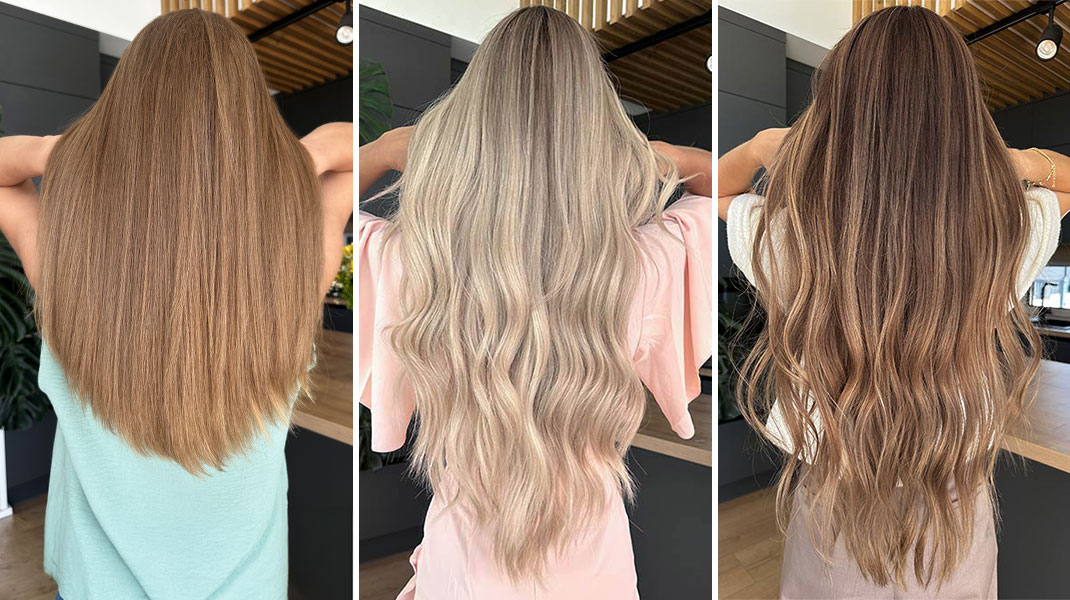
At first glance, choosing a wig may seem simple: you choose one of the different types of wigs available, put it on, and start wearing it. However, once you start looking more closely, it soon becomes clear that different kinds of wigs are not such a simple topic. The same model can be classified according to several different criteria, and especially for beginners, these terms and differences can raise a lot of questions.
There is no single universal way to classify different types of wigs. Some terms define what kind of hair the wig is made of, others describe its construction, hairline, parting or how the wig fits the shape of the head. In this guide, we will discuss the main types of wigs and their names, explain the most commonly used terms and help you understand what they mean in practice.
Table of Contents
Quick summary
- Different types of wigs can usually be classified by several different features, not by one universal system.
- The same wig can be described by hair material, hair quality, hair origin, cap construction, lace area, application method and fit at the same time.
- By hair material and quality, wigs can include synthetic wigs, human hair wigs (Remy hair, virgin hair). Human hair can also be classified by origin: European hair, Brazilian hair or baby fine human hair.
- When choosing the wigs by cap construction, it is helpful to look at the zones: the front lace area, the top / parting area and the back of the cap.
- Terms such as “lace front wigs”, “full lace wigs”, “silk top wigs”, “skin top wigs”, “hand-tied wigs” and “wefted construction” describe different parts or construction details of a wig.
- Glueless wigs and glue-on / adhesive wigs differ by how they are secured on the head, not necessarily by how the hair or cap is made.
- The most natural-looking result usually comes from the full combination of features: hairline, parting, hair type, cap construction, application method, correct size and comfortable fit.
Why wig terminology can be confusing
Wig terminology can be confusing because so many phrases describe different layers of the same product. For example, human hair wig describes the type of hair, lace front wig describes the features of the front lace area, lace top wig describes the top parting area, and glueless wig describes the way it is worn. These names do not compete with one another; all of them could be used at once to talk about the same model.
Another challenge is that the same terms in the market do not always mean the same thing. Some sellers use full lace wigs to describe wigs made with thin lace across the entire cap, while others will use this phrase to refer to fully hand-tied wigs. Similarly, lace top wigs can vary greatly in terms of the size of the lace area, parting options, hairline construction, or whether the wig has lace at the front.
Therefore, when reading about what different types of wigs there are, it is important to ask which part or feature of the wig each term actually describes. Is it about the hair, the hairline, the parting area, the back of the cap, the way the wig is secured, or the overall result of wearing it? This is how we will continue to talk about different types of wigs – through the specific features of the wig.
1. Different types of wigs by hair material and quality
One of the easiest ways to understand different kinds of wigs is to start with the hair itself. It is this characteristic that most significantly determines the overall appearance of the wig, how it looks, how it moves, how it can be styled, and how naturally it blends into your overall look.
Synthetic wigs
Synthetic wigs are made from man-made fibers designed to mimic the look of natural hair. These wigs often come with a pre-formed texture or hairstyle, but their styling, coloring, and customization options are more limited than natural hair wigs. Although synthetic wigs are a popular category of wigs solely due to their lower price range. However, we would like to point out that these wigs are not available in the HAIRALICIOUS® range, because our collection consists exclusively of premium quality human hair wigs.
Human hair wigs
Human hair wigs are made from natural human hair. They are real hair that naturally falls, moves, and responds to styling, so you can use regular styling techniques and create a variety of hairstyles just like you would with your own hair.
However, even when talking about human hair wigs, there are different types of human hair wigs. Human hair wigs can be classified according to several different criteria: the quality and level of processing of the hair (e.g., Remy or virgin hair), the origin or type of hair, as well as the thickness, texture, and general characteristics of the hair.
Remy hair
Remy hair is hair that has its cuticles (the outer layer of the hair, made up of tiny overlapping scales) aligned in the same direction during the production of wigs – from the roots to the tips. Because the cuticles are naturally aligned in one direction, they are less likely to tangle, which reduces friction between the hairs, making the hair smoother, less prone to tangling, and longer lasting. This type of hair is the most expensive to source. In order to maintain the same cuticle orientation, the hair needs to be more carefully selected, sorted, and processed during the manufacturing process, making the process more complex and labor-intensive. For this reason, Remy hair is often considered a higher-quality option in the natural hair wig market.
Virgin hair
Virgin hair is natural hair that has never been dyed, bleached, or chemically treated. Such hair is considered extremely valuable because it retains its natural structure and color. As a result, it can be used for natural-colored virgin hair wigs or dyed later if needed. Since this hair has not been chemically treated before, its condition often remains better, less damaged, and, once dyed, its color retention tends to be more predictable. For our wigs, we always use virgin Remy hair before any coloring process, when coloring is involved.
2. Different types of wigs by hair origin
Different types of human hair wigs are made from hair that is sourced from different regions of the world. The origin of the hair can tell a lot about the type of hair, its thickness, texture, porosity, natural fall, and ultimately how the wig responds to styling and daily care.
Baby fine / fine human hair
Baby fine or fine human hair is extremely thin, light and soft hair. This type of hair often comes from very fine European, especially Slavic-region, children’s hair and is known for its exceptional softness and lightness. However, this raw material is extremely rare on the market, which is why fine human hair wigs are usually not mass-produced, they are more often found in limited edition collections.
European hair
European hair is soft, light and naturally finer hair, similar in texture to many Caucasian hair types. Compared to baby fine hair, a single strand is a little thicker in diameter, but still remains very natural and soft. It usually air-dries straight, so wigs made from European hair are often preferred by clients who like silky-straight styles.
Brazilian hair
Brazilian hair is generally slightly thicker, more porous, and has more texture than European hair. It often has a slight natural wave that can be enhanced by gently scrunching damp hair, and it also holds styled waved and curls very well.
Indian hair
Although Indian hair wigs are not available in the HAIRALICIOUS® range, this hair type is also a fairly common choice in the wider market because it is the most widely available, and much of it is collected during religious ceremonies and donated voluntarily, which keeps sourcing costs low, making this type of hair significantly more affordable than other options on the market. However, Indian hair wigs are usually much thicker and coarser, and therefore in many cases do not correspond to the softer and lighter hair result that many clients are looking for.
3. Different types of wigs by cap construction
Another important criterion by which different types of wigs are classified is cap construction – how the wig cap itself is made. This part determines not only how the wig looks, but also how it fits, what parting options it provides, whether it allows you to have a natural hairline and how comfortable it feels when worn every day. Since various types of wig caps on the market are described by very different terms, it is most convenient to understand them by zones.
By the front: lace front wigs
Lace front wigs have a lace area at the front, which helps create a more natural hairline and a smoother transition from skin to hair. This term can be used differently in the market, but most often it indicates that the front from ear to ear and the top of the wig is lace. In the case of HAIRALICIOUS®, the lace front design is very important because all of our wigs have lace at the front – even when the top zone is silk top / skin top. This solution allows you to create a more natural-looking hairline.
By the top: lace top, and silk top (skin top) wigs
The top area of the wig, where the parting is formed, can be created differently:
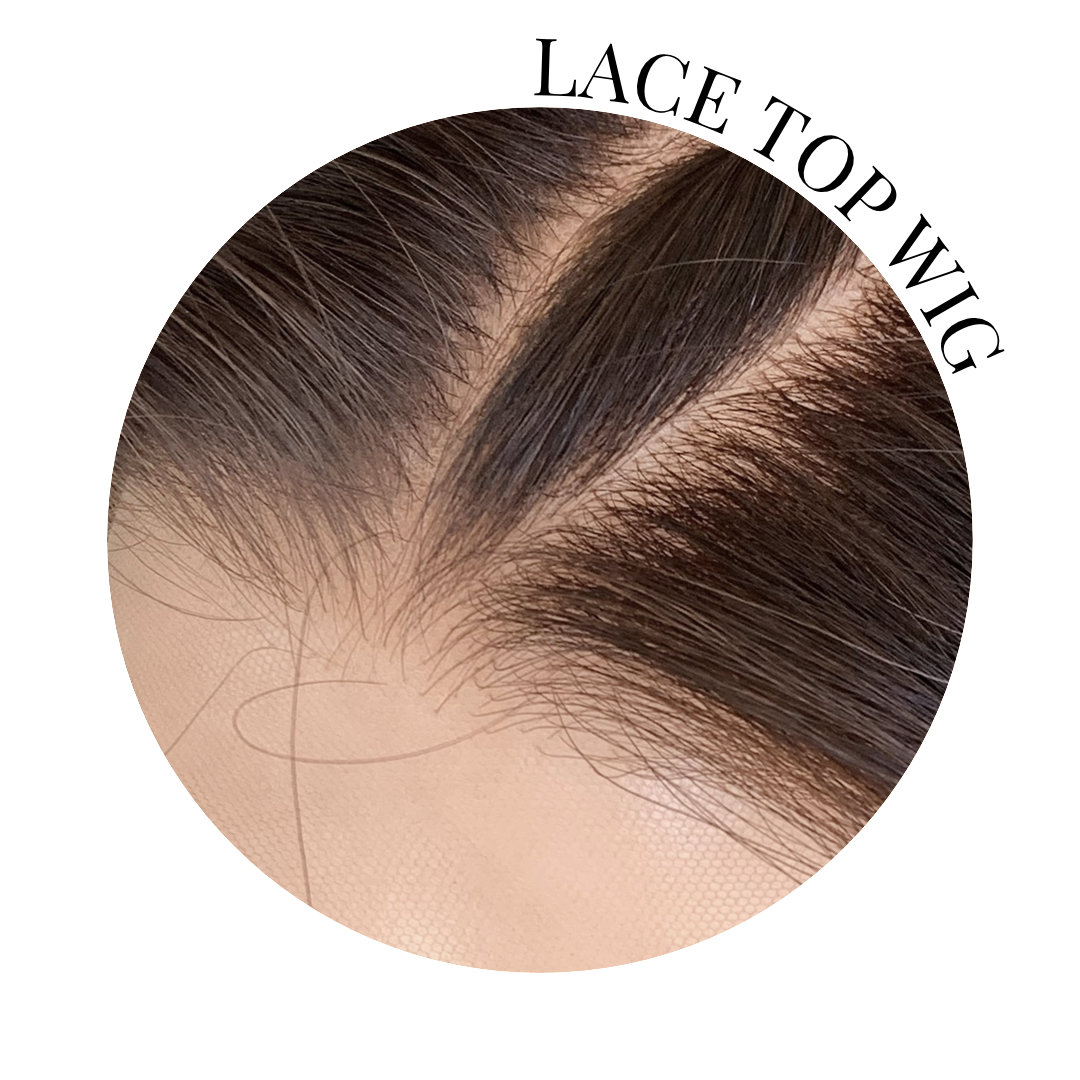
- Lace top wigs have a lace area on top, so the hairline and parting areas can look more unified, without a sharp transition line. Such a construction helps to create a gradual density effect – the hair gradually thickens from the hairline towards the parting area. It is useful to know that in HAIRALICIOUS® lace top solutions, the parting area is larger than in many options on the market: in the Extra Thin Hairline collection, the lace area is 6×6″ – the largest possible lace area. In addition, we add V-shaped bendable strips on the eartabs, so that wig can be worn without any glue. In the Lace Front collection – lace area is 3.5×6″, so you can create an off-center or deep side parting. It is also worth mentioning that we have created lace top wigs with firm ear tabs, making them especially beginner-friendly, and lace extending from ear to ear for the most realistic hairline appearance. These wigs are also known as 13×6-inch lace top wigs.
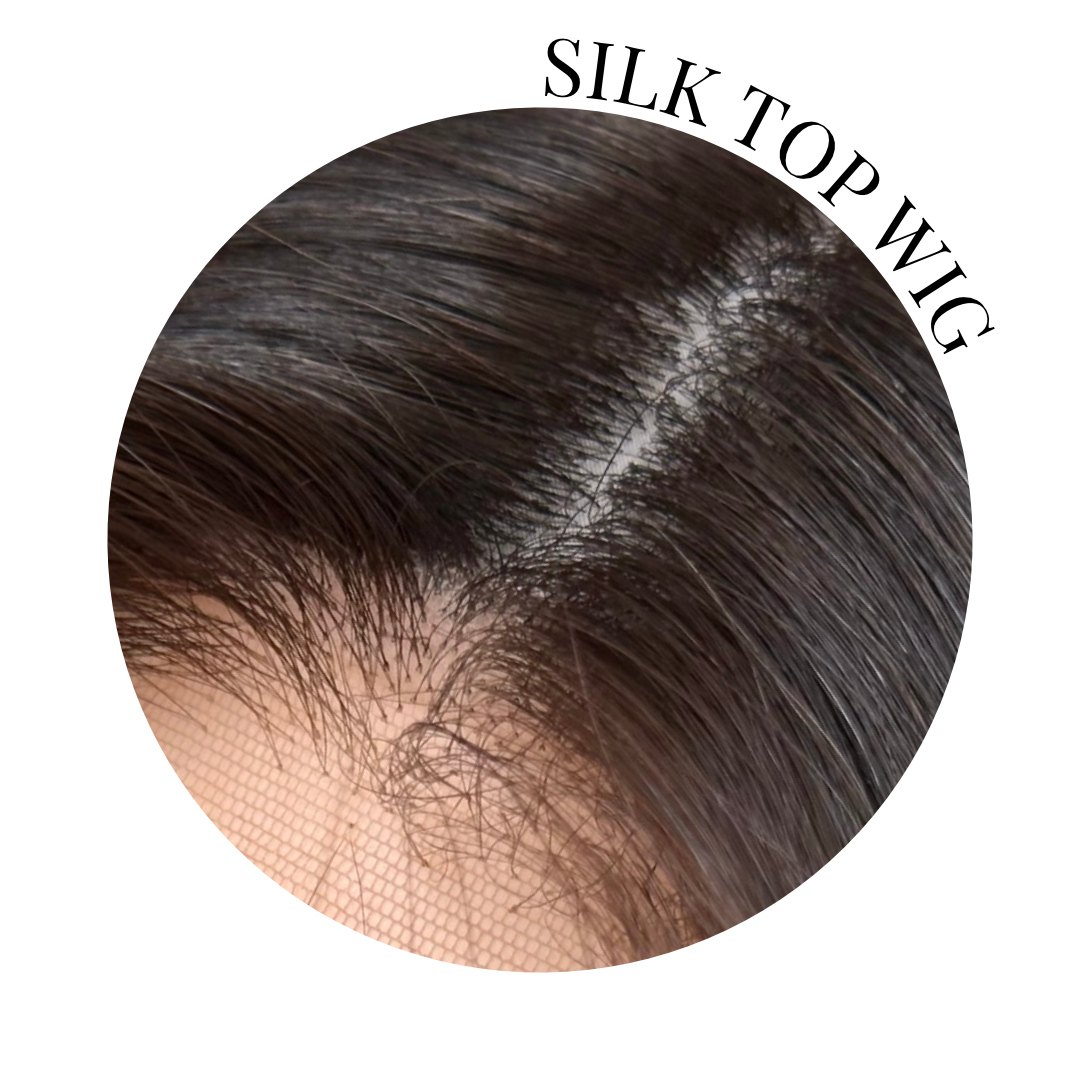
- Silk top wigs, also referred to as skin top wigs in some contexts, work differently: an additional layer is used on top, which helps hide knots and creates the impression that the hair grows directly from the scalp. Therefore, these solutions are especially appreciated for their very natural-looking parting. Moreover, the non-transparent top layer completely hides the bio hair underneath. This is one of the main reasons many people prefer silk top wigs over lace top wigs, particularly those with dark bio hair. However, silk top / skin top wigs on the market may differ in technology, parting area size and whether they have lace in the front. HAIRALICIOUS® silk top / skin top constructions use a large 4.5×4.5″ parting area with lace at the front and our innovative seamless transition from lace to the silk top.
In the HAIRALICIOUS® collections, these zones are designed to combine realistic parting, natural hairline and comfortable glueless wear. For example, our lace top wigs have larger parting zones, while our silk top / skin top solutions provide an extremely realistic scalp-like effect with unique seamless transition from lace to silk.
By the back: wefted, hand-tied and full lace wigs
The back of the cap can also be constructed in several ways.
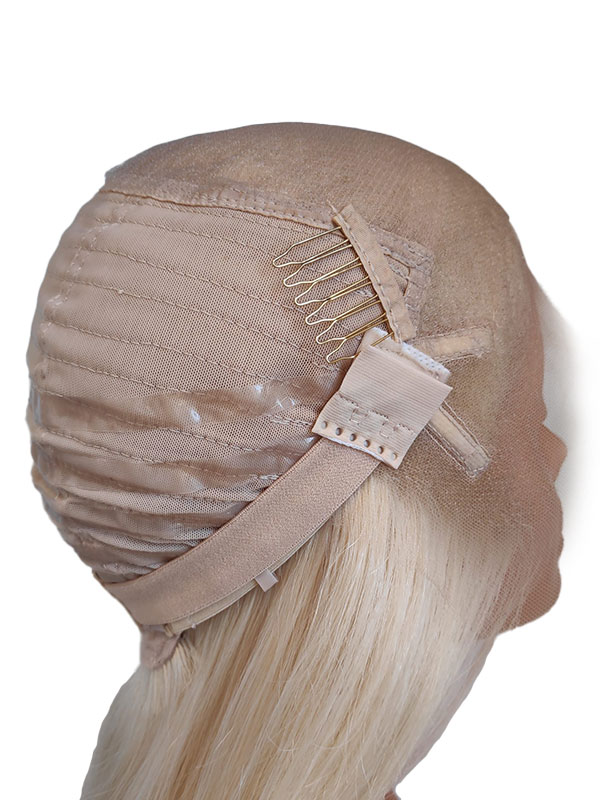
- Wefted construction – the hair is attached at the back in rows called wefts. You can find both open wefts, which are more commonly used in cheaper or synthetic wigs, and closed wefts, which look neater and provide more comfort. All our wefted wigs are constructed with closed wefts.
- Hand-tied wigs mean that the hair is tied to the base by hand. This term does not describe the shape of the cap itself, but rather how the hair is attached to the base.
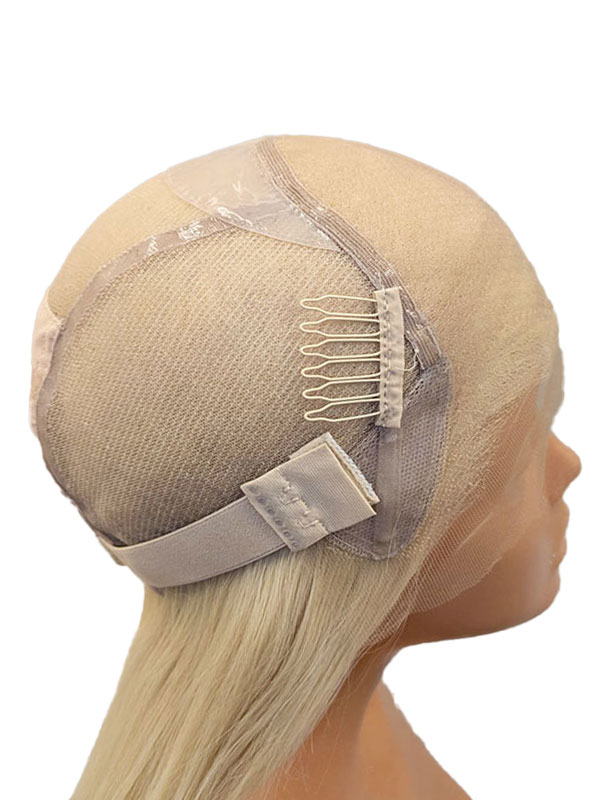
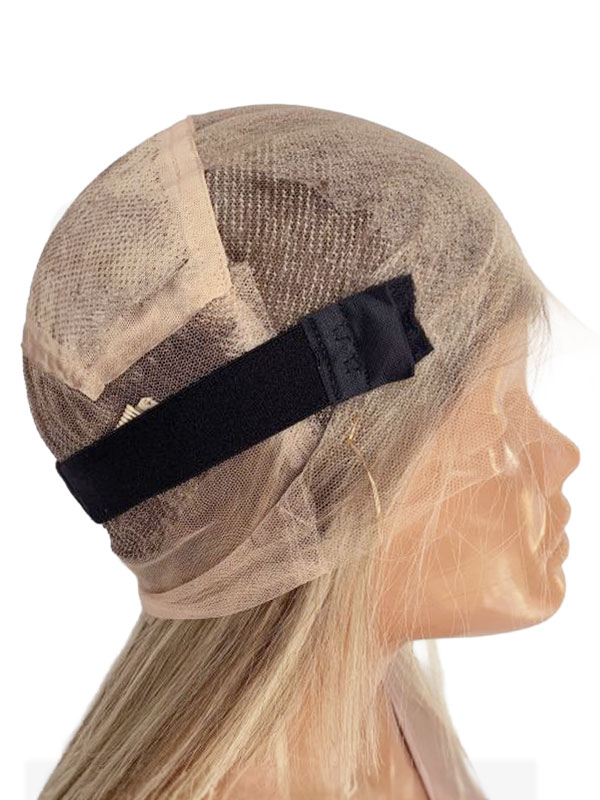
- Full lace wigs are often associated with hand-tied construction, because the hair is tied across the entire cap, so such wigs provide more styling freedom, especially if you want to separate the hair at the back, braid hair or create more complex half-up hairstyles. The term “full lace wig” is also commonly used to describe wigs made entirely from a thin, non-stretch lace base. Such constructions require adhesive around the entire perimeter to ensure a secure fit. In the context of HAIRALICIOUS® full lace wigs, it is important that we use this term to refer to a cap that is completely hand-tied, but it is not simply a thin, non-stretch lace base across the entire head. Our construction uses a more comfortable stretchy back section that adapts to the shape of the head, so the wig can be more flexible and comfortable for everyday wear without requiring any glue.
Other market terms: monofilament, lace frontal wigs
You can also find terms like monofilament wigs and lace frontal wigs on the market.
- Monofilament wigs are more common in the synthetic wig market and use a monofilament base instead of lace material.
- Lace frontal wigs have a lace frontal piece that runs from temple to temple and are usually designed for glued-on wear. The HAIRALICIOUS® range is focused on glueless wigs, so we do not offer these constructions. Instead, we focus on glueless constructions with lace front, lace top or silk top solutions, depending on the desired hairline, parting, and comfort level.
4. Different types of wigs by application method
Another way to understand different types of wigs is to consider how the wig is secured on the head. Wigs can be divided into two main types based on application method: glueless wigs and glue-on / adhesive wigs.
Glueless wigs
Glueless wigs are wigs that do not require glue or tape to stay on the head. Stability is created by the cap itself and additional fastening elements: clips, combs, adjustable straps, elastic bands, silicone grip or wig grips.
HAIRALICIOUS® specializes in glueless wigs because this construction makes the wig easier and faster to put on and remove, while being gentler on the scalp and skin. This is especially important for everyday wear, beginners or clients with more sensitive scalps. Another advantage of glueless wigs is that they can be removed before going to bed. This not only adds comfort to everyday life but also significantly extends the lifespan of the wig.
Glue-on / adhesive wigs
Glue-on or adhesive wigs are secured using special glue or tape. This application method is often associated with lace frontal wigs or other solutions where a very strong hold is desired, but the application itself usually requires more time, skill and additional tools. Unlike glue-on or tape-secured wigs, HAIRALICIOUS® wigs are designed to fit naturally without glue.
5. Different types of wigs by natural-looking effect
When we talk about natural-looking wigs, it is important to understand that naturalness is not created by one feature alone. It comes from several elements working together: the hairline, parting, hair movement, styling flexibility, the correct size, and how well the cap conforms to the shape of the head.
Realistic hairline
For a natural-looking hairline, the lace front construction is especially important because the lace area at the front helps create a smoother transition from skin to hair. Small knots, bleached knots, baby hair and gradual density distribution, when the hair density gradually increases from the beginning of the hairline towards the parting zone, also contribute to the final result.
In the HAIRALICIOUS® collections, you can choose both a naturally denser hairline, available in our Silk Top (Skin Top) Wigs and Lace Front Wigs collections, and an Extra Thin Hairline solution. The Extra Thin Hairline also stands out for its shape – with natural dips and curves, when the hairline looks slightly thinner and deeper at the temples, and gently protrudes forward in the front part. Regardless of hairline density, all of our wigs are made using HD lace, which blends seamlessly with the skin, extremely small single-hair knots around the hairline, and long, natural baby hairs. The vast majority of our wigs also feature bleached knots around the hairline for an even more realistic appearance (please see the product description for details).
Realistic parting
If the most important goal is to have a parting that looks as natural as possible, it is usually worth looking at silk top wigs (also known as skin top wigs). Silk top constructions help to hide knots in the parting area and create the impression that the hair grows directly from the scalp. Lace top wigs can also look very natural, especially when they have a larger parting area and a gradual density effect. However, silk top / skin top solutions are usually chosen when the priority is precisely scalp-like parting and completely concealing the wearer’s own hair underneath.
Flexible styling
If you want more freedom in styling, it is important to consider not only whether the wig is full lace, but also the size of the parting area and how the ear tabs are constructed. A large parting area allows you to change the parting location, and lace ear tabs provide more options for creating updos or half-up hairstyles.
Wefted back wigs can also be quite versatile, especially if their top area is larger and allows for flexible parting. However, full lace wigs provide the greatest styling freedom, as the hair can be parted more naturally at the back – for example, when braiding the hair into several braids or creating more complex half-up hairstyles.
Natural movement
The natural movement of hair is largely dependent on the hair itself and how the hair is attached to the wig base. Human hair wigs fall, move, and respond to styling as bio hair does, so the end result looks more lifelike than with synthetic fibers.
Hair type also matters: fine human hair provides a lighter and softer fall, European hair looks naturally straighter and softer, and Brazilian hair can have more texture and hold waves or curls better.
Comfortable fit
A natural-looking result depends not only on the hairline or parting, but also on how the wig fits the head. Even a very high-quality cap can look unnatural or feel uncomfortable if the wrong size is chosen or the wig is unstable.
The correct cap size, high-quality stretch materials, silicone inserts, well-placed support points, and a curved front lace shape are all important. Together, they help the lace sit flat against the skin without glue. When the cap design adapts to the shape of the head, the wig looks more natural, stays more stable and feels more comfortable every day.
Which wig is right for you?
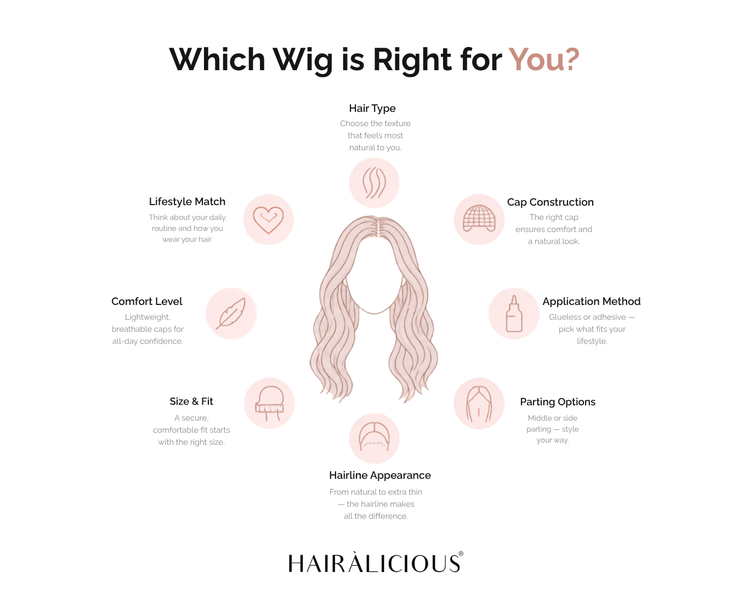
As you can see from this guide, the most suitable type of wig is usually not one specific type, but a combination of several features. When choosing, it is important to consider how much styling freedom you want, how the wig will fit the shape of your head and support your daily lifestyle. In other words, it is best to define your own set of priorities: hair type, cap construction, application method, parting options, hairline appearance, size and comfort level. That is why the answer to the question what are the different types of wigs is only the first step – understanding the types makes it easier to choose which features are really important to you.
If you would like to see these constructions, partings and terminology explained in short video lessons, you can explore the free video lessons in the Hairalicious® Wig Academy.
FAQ
Why do wig types often overlap?
Wig types often overlap because different terms describe different parts of the same product. One term may refer to the hair, another to the cap construction, lace area, or the way the wig is applied. For example, the same wig can be a human hair wig, lace front wig, lace top wig and glueless wig at the same time. These names do not compete with each other – they simply explain different features of the wig.
What should I look at first when comparing different types of wigs?
When comparing different types of wigs, start with the feature that matters most to your daily life. For some people, that may be natural hair movement, for others – realistic hairline, easy glueless application, flexible styling or the most comfortable fit. At Hairalicious, we aim to meet all of these requirements to the highest standards.
After that, it becomes easier to compare the details: hair type, cap construction, parting area, application method and size. A wig should not only look natural in photos, but also feel comfortable and practical for the way you plan to wear it.
Why are some wig types more expensive than others?
Some wig types are more expensive because they require hair that is extremely hard to find, more manual work or more complex cap construction. Human hair, virgin hair, fine human hair, larger lace or silk top areas, hand-tied sections and detailed hairline work can all increase the time and skill needed to create the wig.
Do different types of human hair wigs feel different when worn?
Yes, different human hair wigs can feel different both in the hair itself and in how the cap feels on the head. On the outside, the differences are due to the characteristics of the hair itself – its thickness, texture, softness, density and the way the hair is attached. For example, thinner human hair often looks and feels lighter and softer, while thicker or denser hair can give a sense of more volume and weight.
On the inside, the construction of the wig has a big impact. Comfort is determined by the design of the base of the wig (cap), the lace area, the hand-tied areas, the construction of the top, ventilation and the overall weight of the wig. Stretchier cap construction wigs generally offer greater flexibility, adapting more easily to different head shapes and accommodating thicker bio hair, while less stretchy constructions can provide more stability, and a snugger fit when glued.
Can the same wig be both beginner-friendly and natural-looking?
Yes, the same wig can be both beginner-friendly and natural-looking when the construction is designed well. A glueless wig can be easy to apply, while lace front, realistic parting, correct cap size and secure fit can help it look natural at the same time. Beginner-friendly does not have to mean basic or less realistic. The most comfortable option is often the one that combines simple application with thoughtful cap design, natural hairline details and a fit that feels secure without glue. With over 14 years of experience in the industry, continuous improvements to our wig base designs, and close communication with our returning clients, we have developed exceptional expertise that enables us to create unique, comfortable glueless wig cap designs that cannot be found elsewhere.

 No products in the cart.