


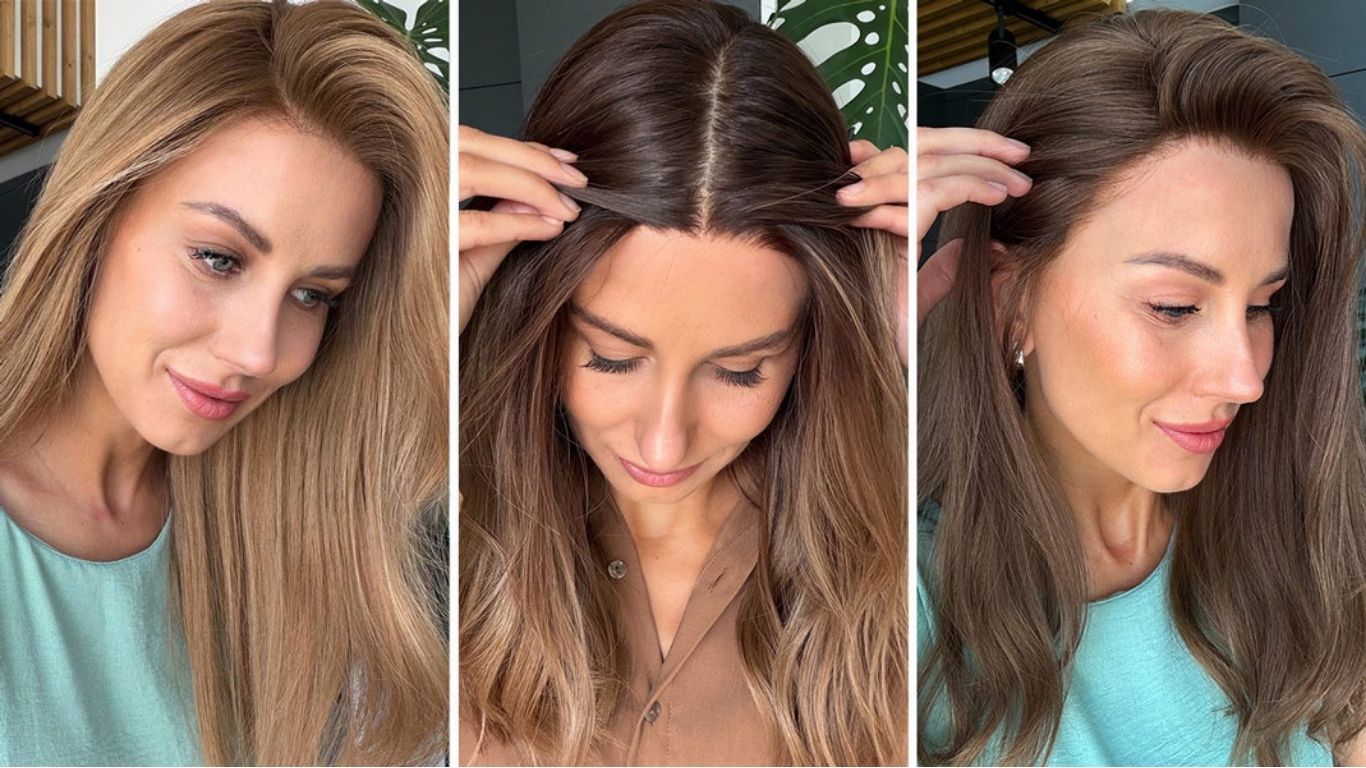
What features distinguish the most natural looking wigs for women, which are often difficult to tell apart from bio hair? Many would say that the most important is the source material itself, that is, high-quality human hair. However, women who have worn a wig at least once will certainly have something to add. While the quality of the source material is important, other factors play an influential role in the final outcome: the front hairline, the parting, the knots, the lace, the distribution of hair density, and how well the cap fits. So how can you judge these details, understand how to make a wig look real, and tell whether it will look natural both in a photo and up close?
Table of Contents
Quick answer
- The most natural looking wigs depend on both their hair source and overall construction.
- Just like bio hair, the hairline of the most natural looking wigs shouldn’t be completely straight or uniformly thick. There should be less hair at the temples and right at the front.
- In the most natural looking wigs, small, properly bleached knots and fine lace that matches the skin tone are less noticeable up close, giving the impression that the hair is growing directly from the scalp.
- In the most natural looking wigs, lace and silk constructions create different effects in the parting area, so there is no single, universally best choice.
- For the most natural looking wigs, both the overall density and its distribution from the front hairline to the back and from the roots to the ends are important.
- In the most natural looking wigs, the right size, position, and cap construction help the wig stay securely in place and ensure the lace lies flat against the scalp.
What Makes a Wig Look Natural
In short, the most natural looking wigs work like systems in which every element must function properly. Key elements of this system include:
- hairline;
- parting;
- wig density distribution;
- the lace;
- the cap and its fit.
If one element looks great but another doesn’t, even the most natural looking wigs may not achieve the desired result. For example, even well-bleached knots will not be enough if the hairline is too dense. Up close, it will still be noticeable that you’re wearing a wig.
When choosing from the most realistic human hair wigs, you should consider more than just the hair itself. Examine how the wig looks at the forehead, temples, and parting, and, if possible, check whether the hair moves and falls naturally.
There’s one more important detail when deciding how to make a wig look more natural. Even a perfectly crafted wig won’t look its best if the wrong size is chosen or if it’s put on incorrectly. So while realism starts with the construction, the final result also depends on how well the wig is fitted to the person wearing it.
Why the hairline matters in the most natural looking wigs
The hairline is one of the first places to pay attention to when choosing the most natural looking wigs. A natural hairline is rarely completely straight or of uniform density. There is usually less hair at the temples and right at the start of the hairline, and it becomes gradually denser as it moves toward the crown and the back of the head. Therefore, a high-quality pre-plucked hairline wig should not have a distinct, uniform-density line, but rather a gradual transition. Thin, shorter hairs around the face also enhance a natural-looking growth pattern.
The knots by which the hair is attached to the lace are also important. In the most natural looking wigs, smaller and less visible knots reduce the dark spots that could reveal that a wig is being worn.
Whether the knots on the entire lace area need to be bleached depends on the chosen construction and the wearer’s priorities. In wigs from the Hairalicious® Extra Thin Hairline collection, the knots are bleached across the entire lace area. In all wigs from the Lace Front collection, the knots in the hairline area are bleached, while the knots in the entire lace area are bleached only in some models. Thus, you can choose based on what is most important to you: less noticeable knots throughout the entire lace section of the wig or stronger, more durable knots throughout the rest of the lace while maintaining the natural appearance of the front hairline.
In the most natural looking wigs, the lace itself also affects realism through its thinness, transparency, and compatibility with your skin tone. The sum of these properties helps realistic hairline wigs blend more naturally with the face. The Hairalicious® collection is tailored for lighter complexions. Read more about how our wigs are designed for white women and the most important nuances of lace color.
The parting and the scalp effect
While the hairline matters in terms of blending the lace with the forehead, in the parting area the focus is placed on making the hair appear to grow directly from the scalp. In the lace construction, each hair is secured with a knot, so the final result is determined by two main factors:
- knot size;
- whether they are bleached
In the most natural looking wigs, knot size and bleaching influence how visible the knots are along the parting. Smaller, bleached knots blend more closely with the scalp and create a more realistic effect,. Larger, unbleached knots are more visible, but they are generally more durable. Their appearance can also be softened with makeup applied along the parting.
Root appearance is a matter of styling preference rather than one option being inherently more natural. Hairalicious® Lace Top wigs naturally create a flatter parting, while the Extra Thin Hairline collection naturally has more volume at the roots. Both can be styled either flat or voluminous, so consider how you usually wear your hair. All Hairalicious® wigs also allow you to change the parting position. Their wide parting area gives you the freedom to create a middle, side, or deep side part.
The silk construction works slightly differently. In silk-top wigs, the knots are hidden beneath a layer of silk. They are not visible in this area, which imitates the scalp. In Hairalicious® Silk Top models, the knots along the hairline are also lightened. As the silk section is thicker than the lace at the front, a transition between these materials is inevitable. We pay special attention to make this transition seamless and nearly invisible.
When trying to figure out how to make a wig part look natural, think about more than just the construction’s name.
Consider how the cap construction will work with your bio hair and how you usually wear your parting. If you have dark bio hair and want to conceal it as easily as possible, a Silk Top wig may be the more practical choice. If you have little or no bio hair, the thin material of a Lace Top wig allows your scalp tone to show through. Also consider whether you prefer a naturally flatter parting or more volume at the roots. Lace Front and Silk Top collections carry wigs with naturally flatter partings, while Extra Thin Hairline wigs naturally have more root volume, although both can be styled either way.
Density and length in the most natural looking wigs
When choosing among the most natural looking wigs, you’ll often encounter a feature called wig density, measured as a percentage. The higher the percentage, the more hair was used to make the wig. However, the total amount of hair is only one part of the equation. It’s just as important where and how this hair is distributed.
As mentioned above, hair does not naturally grow at a uniform density. There is typically less hair at the temples and right at the start of the hairline. The highest density usually occurs at the center of the crown and at the back of the head. The most natural looking wigs replicate these natural patterns. The hair is not secured in uniform intervals, but rather according to its natural distribution. If the entire wig is uniformly dense, the result may appear too one-dimensional, somewhat bulky and less realistic.
The distribution of hair thickness along the entire length is also important. Single-drawn wigs use hairs of varying lengths, so the hair gradually thins toward the ends and replicates the natural, slightly uneven hair fall. Double-drawn hair remains denser from the roots to the ends, creating a fuller, more even look. This doesn’t mean that single-drawn always looks more natural. If the wearer’s bio hair is naturally thick or a full, blunt-cut hairstyle is desired, double-drawn hair can help natural looking human hair wigs appear completely realistic. Most importantly, the density and fullness of the most natural looking wigs should match the hair type and hairstyle you wish to replicate.
Cap construction, fit, and how the wig sits
Even the most natural looking wigs can appear unnatural if the cap is the wrong size or doesn’t match the shape of your head. A cap that’s too large may slip and cause the lace to crease, while one that’s too small may put pressure on and pull the wig’s front section. Therefore, the right size is one of the most important factors when deciding how to make a lace front wig look natural.
Depending on the model, Hairalicious® wigs use stretchy materials, adjustable straps, additional elastic bands, silicone inserts, or different ear tab designs to provide stability without glue. The lace is thermally molded to the curve of the head, while in some models, medical-grade silicone elements help the cap stay in place more securely. In the most natural looking wigs, these solutions produce a smoother lace fit and leave less empty space inside the cap.
If you’d like some extra info on how the right wig size affects your look, learn more about wig cap construction and see our wig size chart. If the wig is worn directly against the scalp, soft inner materials and smooth seams are also important. Read more about this in the wigs for hair loss and sensitive scalp guide.
How to make a wig look natural from day 1
The construction of the most natural looking wigs plays a major role in the final result, but each wig must still be adjusted properly before its first wear. If you want to understand how to make a wig look real or how to cut a wig to make it look natural, start with these scenarios:
- If there is excess lace at the front, you can order it pre-trimmed or carefully trim it close to the hairline. When wearing the wig without adhesive, a straighter lace edge helps it lie flatter. When considering how to pluck a wig to make it look natural, remember that there’s no need to do it yourself if you’ve chosen a pre-plucked wig.
- If the wig appears to be positioned too low, check its placement relative to your face. When deciding how to wear a wig and make it look natural, the four-finger rule can help. Hold four fingers horizontally above your eyebrows. The approximate starting point of the hairline should be at the level of your last finger. This guideline is especially helpful when learning how to make a wig look more natural without your own hairline, but the final position should still suit your individual facial proportions.
- If the side parting looks too straight and harsh, lightly dampen the hair with water and shape it into a soft C-shape. When considering how to style a wig to look natural, this parting shape can help distribute the hair more evenly on both sides.
Which Hairalicious® collection offers the most natural looking wigs?
The most suitable collection depends on which aspect of a natural look is most important to you:
| If what matters most is… | We recommend this collection | Why do we recommend it? |
|---|---|---|
| Subtle front hairline | Extra Thin Hairline | A lower-density pre-plucked hairline, fine lace, and lightened knots throughout the lace area help create a realistic look even up close. |
| A clear illusion of the scalp and fuller hair | Silk Top | The knots are hidden under a layer of silk, and the knots at the front hairline are bleached. Double-drawn hair remains fuller along its entire length. |
| Flat parting and denser European double-drawn hair | Lace Front | The knots on all models are bleached at the hairline, and on some, throughout the entire lace area. The lace construction allows for a naturally flat parting. |
So, the most realistic looking wigs aren’t all part of a single, universal category. When considering how to make wig look natural, your choice depends on whether the hairline, the illusion of a scalp, the parting, or the fullness of the hair is most important to you. If you’re still unsure how to make a wig look natural, see our full wig decision guide and compare the options in more detail based on your needs.
FAQ
What makes a wig look natural?
The most natural looking wigs rely on more than real human hair. A realistic hairline, a natural-looking parting, small or hidden knots, fine lace, natural density distribution, and a well-fitting cap are also important.
What kind of wig looks most natural?
The best natural looking wigs are usually correctly sized human hair wigs with a gradually thickening hairline, small or concealed knots, and proportionate density. Choosing a wig that best suits the wearer depends on her priorities: the front hairline, parting, the illusion of a scalp, or hair volume.
What human hair wig brands offer the most natural-looking hairlines?
When comparing the best natural looking wigs, consider not only the brand but also the specific design of each wig. For example, the Hairalicious® Extra Thin Hairline collection features a lower-density pre-plucked hairline, finer and shorter hair around the face, and lightened knots throughout the lace area. These are the key features that help create a natural-looking hairline.
Can you recommend wig lace options for a realistic hairline?
Look for thin, transparent lace in a shade that matches your skin tone. Small bleached knots and a gradually thickening hairline also help create a natural-looking result. The Hairalicious® Extra Thin Hairline collection emphasizes a subtle front hairline, while the Lace Front styles combine a naturally flat part with denser hair.
What is the most realistic wig in the world?
No single option among the most realistic wigs is objectively the best in the world. The result depends on the shape and size of the head, skin tone, hair type and density, cap size, and how the wig is positioned. Therefore, among the most natural looking wigs, the best choice is the one whose design matches the wearer’s appearance and needs.
Why does my wig look fake?
The most common causes are the wrong size or position of the wig, a hairline that is too dense or too straight, visible knots, and lace that doesn’t match your skin tone.
Do bleached knots make a wig look more natural?
Yes. In a bleached knots wig, lightened knots are less noticeable, so the hair looks more like it’s growing directly from the scalp. The size of the knots, the transparency of the lace, and the density of the hairline are also important for a natural result.
Is a silk top or a lace top more realistic?
Both options can look natural, but they produce different results. A silk top focuses on parting realism, as the knots are hidden beneath a layer of silk to create a clear, scalp-like effect. A lace top wig focuses on hairline realism, using thin lace to create gradual, natural-looking transition from hairline to parting.
How can I make my wig hairline look more natural?
Advice on how to make your wig look natural for beginners starts with checking its height, carefully trimming any excess lace, and making sure the cap fits snugly. The four-finger rule can help you determine the approximate starting point of the hairline, but its final position should be adjusted to suit the proportions of your face.
Does wig density affect how natural a wig looks?
Yes, but it’s not the overall wig density percentage that matters. The distribution of the hair is the most important. A lower density at the hairline and a balanced amount of hair along the entire length usually better mimic natural hair growth than a uniform density across all areas. With the right hair distribution, both high- and low-density wigs can look natural.
 No products in the cart.