


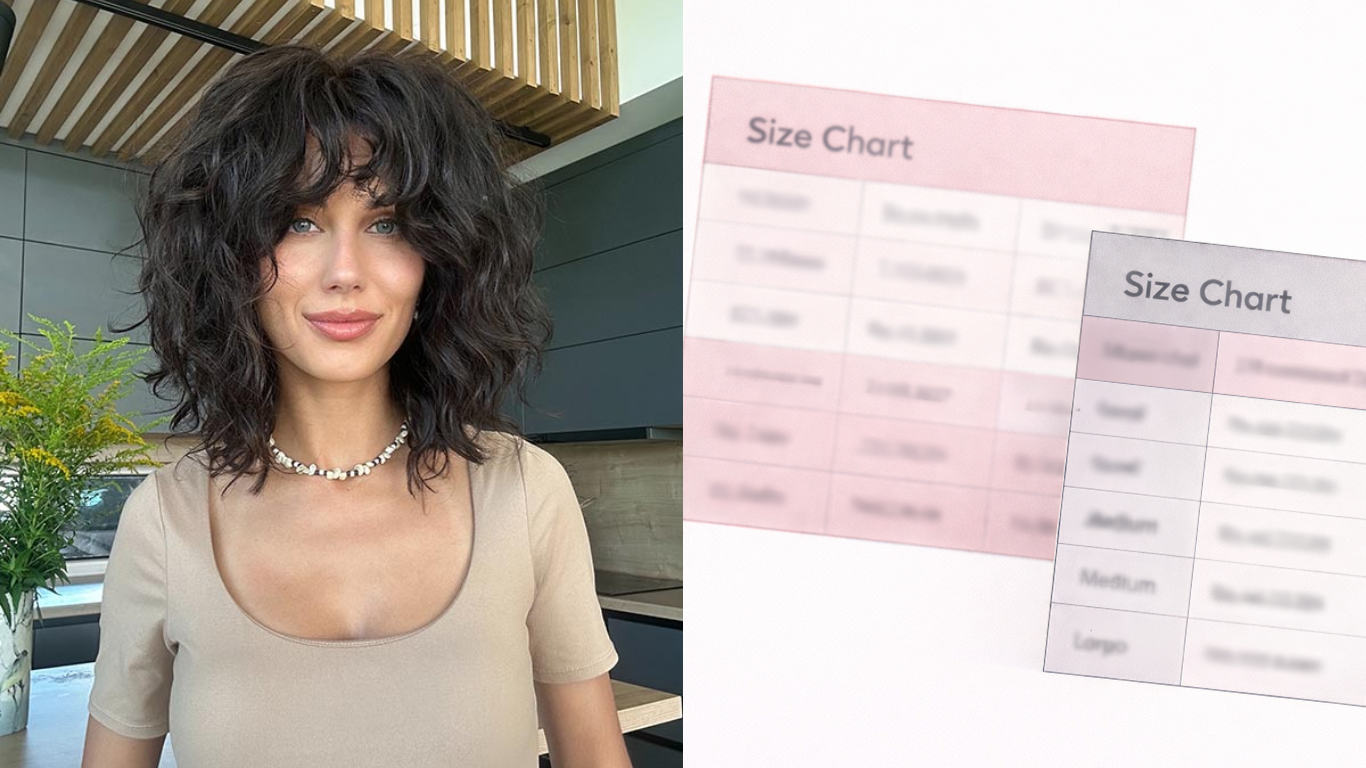
Why “Ultra small, Small, Medium, Large” can sometimes be misleading
If you know your shoe size, buying shoes in a physical store or online is usually not a big worry – the width or comfort of the shoe may vary, but a size 7 will never actually be a size 10. This is because shoe and clothing sizes are standardized, and buyers can rely on the number displayed on the label.
The situation is somewhat different with wigs. The wig industry still lacks precise standards or a universal system that would define specific sizes, largely due to the complexity of wig construction, wide diversity of human head shapes and hair-loss conditions. Therefore, names such as ultra small or petite wig, small wig, medium wig, or large wig, although familiar and promising a simple choice, may vary depending on the manufacturer. Sometimes – even very noticeably. For example, the wig cap size between two medium-sized wigs can vary so much that one will fit like a glove, while the other will be awkwardly too small.
Why does this happen?
Wig caps, materials and elasticity
Wigs are designed using a wide variety of wig caps as well as different wig materials. Some wigs have more elastic areas, while minimal or no stretch in the base. Some wig caps stretch more in width but have almost no flexibility in length. Some wigs, particularly those made entirely of thin lace, may have no elasticity at all.
Construction techniques and intended fit
Different manufacturing techniques also contribute to this – for example, wigs made with wefts or hand-tied construction behave differently even if they have the same size designation. The intention behind wig design also matters. Some people prefer a snug cap that can be tightened, while others—especially those prone to headaches—feel better when the wig stays in place through grip rather than pressure. Different cap constructions and materials address these needs, and no single cap fits all: some are better for people without hair, others for those with more natural hair.
Why brand-specific size charts matters
Another important aspect is how each brand defines its sizes. One manufacturer’s large wig size may be designed for a smaller head circumference but a longer front to nape, while another may be the opposite. Without a clear wig size chart specific to a particular manufacturer, the name itself says almost nothing.
That is why experienced wig wearers and professionals do not rely solely on nominal sizes. Instead, they look for a specific wig measurement guide and compare it to their head measurements.
How to measure your head for a wig
Correct measurements form the basis for the wig size chart to be truly effective. Regardless of the wig sizes and types of wigs you are looking for, without accurate head measurements, it will always be a matter of guesswork. That’s why any wig measurement guide online will advise you to start with your head measurements, not the wig.
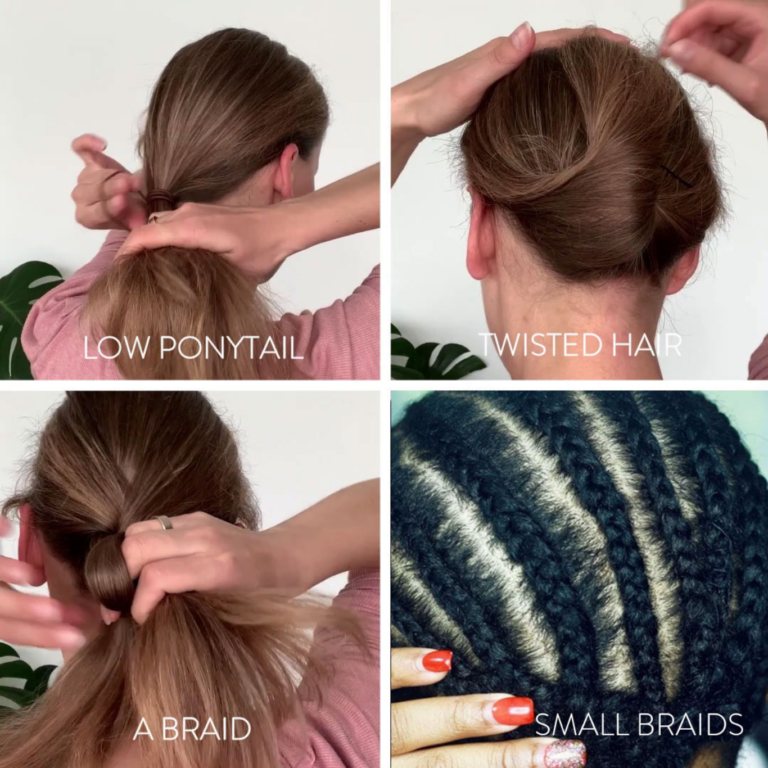
One important rule that is often overlooked: before measuring your head, style your bio hair the way you would wear it under the wig. Otherwise, the measurements may be distorted. We recommend choosing the flattest, smoothest hairstyles possible (for example, loosely braiding your hair) so that when you put on the wig, it looks as natural as possible, without any bumps that certain hair styling methods can create.
We recommend using a soft, flexible measuring tape for measurements. It should fit snugly against the head, but not be tight, and should be held straight, without twisting. To ensure accuracy, it is recommended to repeat each measurement several times – if the numbers remain the same after several attempts, the wig measurement has been taken correctly.
The two most important measurements
Circumference
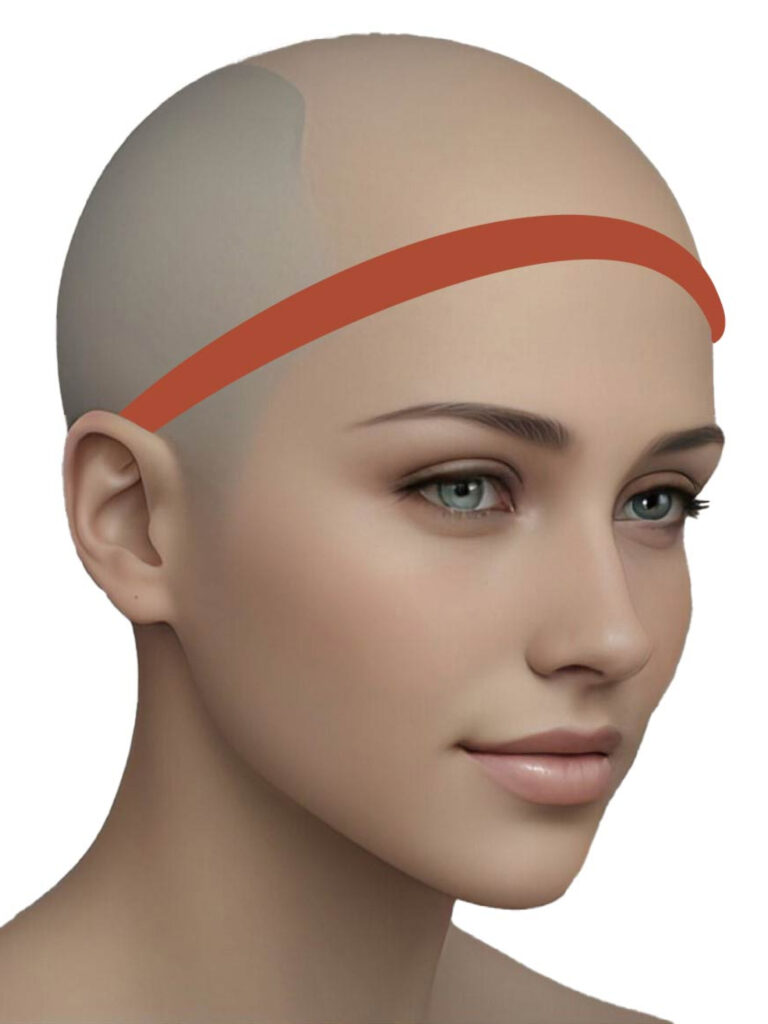
This measurement is obtained by wrapping a measuring tape around the entire hairline above the ears, across the back of the head. Circumference helps to predict whether the wig will feel too tight or too loose.
Front to nape
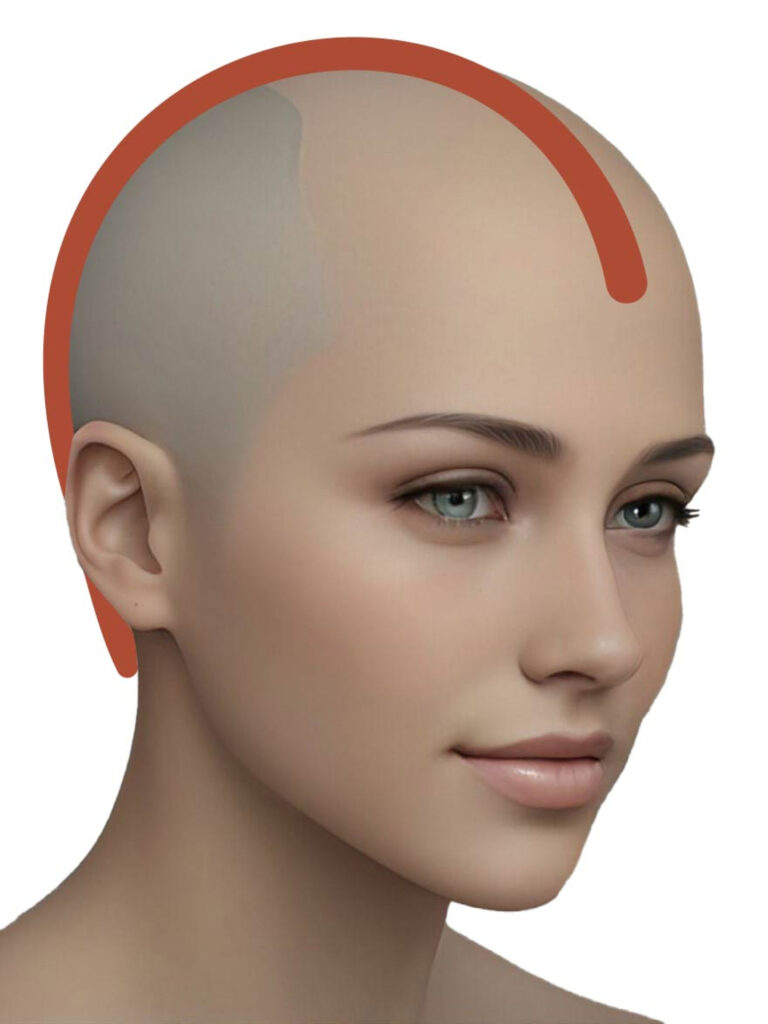
This is the length from the hairline at the forehead to the nape of the neck, where the head ends and the neck begins. This measurement is particularly important because, unlike the circumference in many wig designs, it cannot be adjusted.
If you have complete hair loss, the “front” point should be measured from where you would ideally want the hairline to begin when wearing a wig. If you’re not sure about the placement, you can follow the “4-finger rule.” Place four fingers horizontally on your forehead, starting at your eyebrows. Where the last finger ends indicates where the wig’s hairline should ideally begin.
To locate the nape of your neck, tilt your head back and look upward to find the point where the neck bends and a natural crease forms. This ensures the wig ends at the correct position, helping it stay secure and comfortable even when the head is lifted, and preventing rubbing or slippage.
How precise do wig cap measurements need to be?
Should wig cap measurements match your head measurements inch for inch? In short, in most cases, not really. For a wig to fit well and be comfy, it doesn’t usually have to perfectly match your head measurements down to the smallest detail.
Most wig brands provide average reference measurements, while we provide ranges to represent fit as accurately as possible by showing the range of head measurements the wig cap can accommodate. This is because different wig caps can have different elasticity. The most important thing is to understand where flexibility is possible and where it is not.
When it comes to circumference, a slightly larger wig size is usually not a problem. In most wigs, this part can be adjusted slightly. Therefore, if your head circumference falls within the range specified in the wig chart or is very close to it, it will be a fairly safe choice.
The situation with the front to nape measurement is different. This measurement cannot be adjusted in a wig, and it is often what determines how the wig will look and feel when worn. If the front to nape of the wig is shorter than your head, even a small difference can cause a feeling of tightness, the wig to rise up, and instability. For this reason, it is very important that your head size fits within the range specified in the wig size chart of the selected manufacturer.
How hair preparation can affect the fit
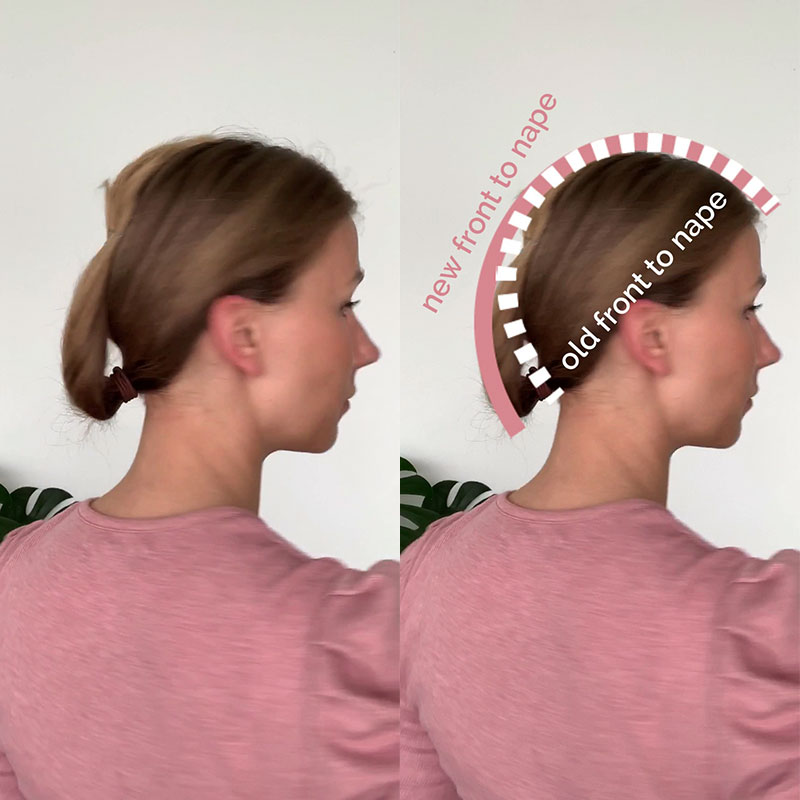
When measuring, it is very important to have your hair styled the way you plan to wear it under the wig. If you have natural hair and the front-to-nape measurement feels too short, preparing your hair as flat as possible helps to free up the space under the wig. If the measurement is too big, excess space can cause instability or rubbing at the neck; in this case, tying your hair in a low ponytail can help fill the space so the wig sits more securely and comfortably.
Wig size chart by Hairalicious®
It is important to note once again that wig sizes on the market are not universal. This means that even if you see the same size names (ultra small or petite, small, medium, large) in the charts of different manufacturers, the wig size measurements will not necessarily match. So, if you have previously purchased from one brand and now want to try another, it is worth reviewing the relevant wig size chart and, if necessary, re-measuring your head.
Below is our own Hairalicious® glueless human hair wigs wig size chart. This chart is for general reference only; if you are planning to choose a wig from our range, for the best fit, always check the specific measurements listed in each wig’s product description.
| Wig size | Head circumference optimal range | Front to nape optimal range |
| Ultra small | 20.25”–21.25” | 12”-12.5” |
| Small | 21.25”-22.25” | 13”-14” |
| Medium | 22.5”-23.25” | 13.75”-14.75” |
| Large | 23.5” | 15”-15.5” |
 No products in the cart.